
AlphaFold predicted structure
CCR2 · P41597
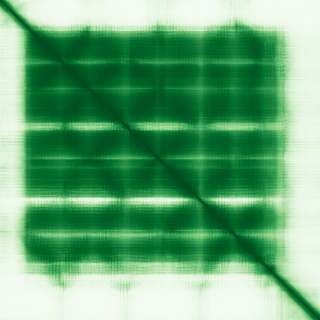
Mean pLDDT
77.8/ 100
Confident
374 residues
Confidence breakdown
- Very high(≥ 90)53%
- Confident(70–90)19%
- Low(50–70)8%
- Very low(< 50)21%
Open interactive 3D viewer
AlphaFold (Jumper et al., 2021) · CC BY 4.0
C-C motif chemokine receptor 2
Annotations refreshed 3 months ago.
Diagnostic Grade (Green)
COVID-19 research
Unknowncystic disease of lung
HIV-1 infection
COVID-19
celiac disease
rheumatoid arthritis
alcohol drinking
Oral ulcer
Hepatic fibrosis
metabolic dysfunction-associated steatohepatitis
systemic lupus erythematosus
Score is the Open Targets composite evidence score (0-1). Higher = stronger gene-disease association.
C-C chemokine receptor type 2
Key functional receptor for CCL2 but can also bind CCL7, and CCL12 (PubMed:23408426, PubMed:38157855, PubMed:8048929, PubMed:8146186). Also transduces signaling mediated by CCL13 (PubMed:38157855). Its binding with CCL2 on monocytes and macrophages mediates chemotaxis and migration induction through the activation of the PI3K cascade, the small G protein Rac and lamellipodium protrusion (PubMed:38157855). Also acts as a receptor for the beta-defensin DEFB106A/DEFB106B (PubMed:23938203). Regulates the expression of T-cell inflammatory cytokines and T-cell differentiation, promoting the differentiation of T-cells into T-helper 17 cells (Th17) during inflammation (By similarity). Facilitates the export of mature thymocytes by enhancing directional movement of thymocytes to sphingosine-1-phosphate stimulation and up-regulation of S1P1R expression; signals through the JAK-STAT pathway to regulate FOXO1 activity leading to an increased expression of S1P1R (By similarity). Plays an important role in mediating peripheral nerve injury-induced neuropathic pain (By similarity). Increases NMDA-mediated synaptic transmission in both dopamine D1 and D2 receptor-containing neurons, which may be caused by MAPK/ERK-dependent phosphorylation of GRIN2B/NMDAR2B (By similarity). Mediates the recruitment of macrophages and monocytes to the injury site following brain injury (By similarity)
CCR2 · P41597
Mean pLDDT
77.8/ 100
Confident
374 residues
Confidence breakdown
AlphaFold (Jumper et al., 2021) · CC BY 4.0