AlphaFold predicted structure
CD244 · Q9BZW8
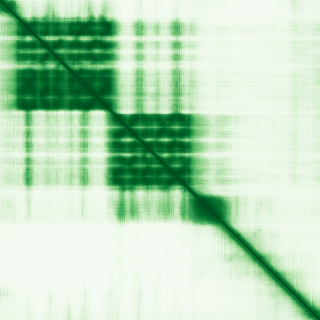
Mean pLDDT
71.1/ 100
Confident
370 residues
Confidence breakdown
- Very high(≥ 90)24%
- Confident(70–90)30%
- Low(50–70)27%
- Very low(< 50)19%
AlphaFold (Jumper et al., 2021) · CC BY 4.0
CD244 molecule
Annotations refreshed 9 hours ago.
Diagnostic Grade (Green)
COVID-19 research
UnknownCrohn disease
rheumatoid arthritis
Familial prostate cancer
prostate cancer
neoplasm
acute myeloid leukemia
tropical spastic paraparesis
melanoma
head and neck squamous cell carcinoma
leukemia
Score is the Open Targets composite evidence score (0-1). Higher = stronger gene-disease association.
Natural killer cell receptor 2B4
Heterophilic receptor of the signaling lymphocytic activation molecule (SLAM) family; its ligand is CD48. SLAM receptors triggered by homo- or heterotypic cell-cell interactions are modulating the activation and differentiation of a wide variety of immune cells and thus are involved in the regulation and interconnection of both innate and adaptive immune response. Activities are controlled by presence or absence of small cytoplasmic adapter proteins, SH2D1A/SAP and/or SH2D1B/EAT-2. Acts as activating natural killer (NK) cell receptor (PubMed:10359122, PubMed:11714776, PubMed:8376943). Activating function implicates association with SH2D1A and FYN (PubMed:15713798). Downstreaming signaling involves predominantly VAV1, and, to a lesser degree, INPP5D/SHIP1 and CBL. Signal attenuation in the absence of SH2D1A is proposed to be dependent on INPP5D and to a lesser extent PTPN6/SHP-1 and PTPN11/SHP-2 (PubMed:10934222, PubMed:15713798). Stimulates NK cell cytotoxicity, production of IFN-gamma and granule exocytosis (PubMed:11714776, PubMed:8376943). Optimal expansion and activation of NK cells seems to be dependent on the engagement of CD244 with CD48 expressed on neighboring NK cells (By similarity). Acts as costimulator in NK activation by enhancing signals by other NK receptors such as NCR3 and NCR1 (PubMed:10741393). At early stages of NK cell differentiation may function as an inhibitory receptor possibly ensuring the self-tolerance of developing NK cells (PubMed:11917118). Involved in the regulation of CD8(+) T-cell proliferation; expression on activated T-cells and binding to CD48 provides costimulatory-like function for neighboring T-cells (By similarity). Inhibits inflammatory responses in dendritic cells (DCs) (By similarity)
CD244 · Q9BZW8

Mean pLDDT
71.1/ 100
Confident
370 residues
Confidence breakdown
AlphaFold (Jumper et al., 2021) · CC BY 4.0