
AlphaFold predicted structure
CD27 · P26842
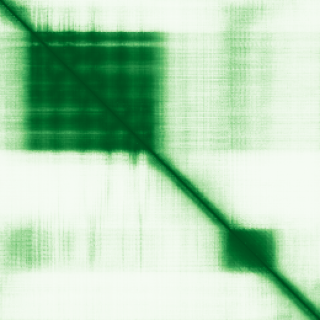
Mean pLDDT
71.7/ 100
Confident
260 residues
Confidence breakdown
- Very high(≥ 90)43%
- Confident(70–90)9%
- Low(50–70)20%
- Very low(< 50)29%
Open interactive 3D viewer
AlphaFold (Jumper et al., 2021) · CC BY 4.0
CD27 molecule
Annotations refreshed 3 months ago.
Diagnostic Grade (Green)
COVID-19 research
BIALLELIC, autosomal or pseudoautosomalPrimary immunodeficiency or monogenic inflammatory bowel disease
BIALLELIC, autosomal or pseudoautosomallymphoproliferative syndrome 2
lymphoproliferative syndrome
combined immunodeficiency
autosomal recessive lymphoproliferative disease
severe combined immunodeficiency
Immunodeficiency
Combined T and B cell immunodeficiency
neurodegenerative disease
hereditary disease
autoinflammatory syndrome
Score is the Open Targets composite evidence score (0-1). Higher = stronger gene-disease association.
CD27 antigen
Costimulatory immune-checkpoint receptor expressed at the surface of T-cells, NK-cells and B-cells which binds to and is activated by its ligand CD70/CD27L expressed by B-cells (PubMed:28011863). The CD70-CD27 signaling pathway mediates antigen-specific T-cell activation and expansion which in turn provides immune surveillance of B-cells (PubMed:28011863). Mechanistically, CD70 ligation activates the TRAF2-PTPN6 axis that subsequently inhibits LCK phosphorylation to promote phenotypic and transcriptional adaptations of T-cell memory (PubMed:38354704). In addition, activation by CD70 on early progenitor cells provides a negative feedback signal to leukocyte differentiation during immune activation and thus modulates hematopoiesis (By similarity). Negatively regulates the function of Th2 lymphocytes in the adipose tissue (By similarity)
CD27 · P26842
Mean pLDDT
71.7/ 100
Confident
260 residues
Confidence breakdown
AlphaFold (Jumper et al., 2021) · CC BY 4.0