
AlphaFold predicted structure
CD46 · P15529
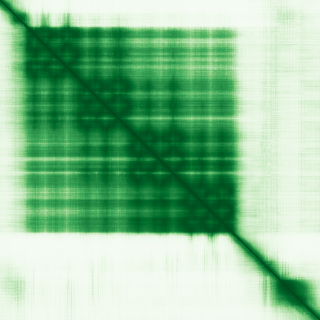
Mean pLDDT
82.1/ 100
Confident
392 residues
Confidence breakdown
- Very high(≥ 90)65%
- Confident(70–90)7%
- Low(50–70)11%
- Very low(< 50)16%
Open interactive 3D viewer
AlphaFold (Jumper et al., 2021) · CC BY 4.0
CD46 molecule
Annotations refreshed 3 months ago.
Diagnostic Grade (Green)
Atypical haemolytic uraemic syndrome
BOTH monoallelic and biallelic, autosomal or pseudoautosomalCOVID-19 research
BOTH monoallelic and biallelic, autosomal or pseudoautosomalPrimary immunodeficiency or monogenic inflammatory bowel disease
BOTH monoallelic and biallelic, autosomal or pseudoautosomalUnexplained kidney failure in young people
BOTH monoallelic and biallelic, autosomal or pseudoautosomalMembranoproliferative glomerulonephritis including C3 glomerulopathy
BOTH monoallelic and biallelic, autosomal or pseudoautosomalatypical hemolytic-uremic syndrome with MCP/CD46 anomaly
atypical hemolytic-uremic syndrome
complement deficiency
atypical hemolytic uremic syndrome with complement gene abnormality
thrombotic microangiopathy
degeneration of macula and posterior pole
macular degeneration
retinal disorder
age-related macular degeneration
chondromalacia
Score is the Open Targets composite evidence score (0-1). Higher = stronger gene-disease association.
Membrane cofactor protein
Acts as a cofactor for complement factor I, a serine protease which protects autologous cells against complement-mediated injury by cleaving C3b and C4b deposited on host tissue. May be involved in the fusion of the spermatozoa with the oocyte during fertilization. Also acts as a costimulatory factor for T-cells which induces the differentiation of CD4+ into T-regulatory 1 cells. T-regulatory 1 cells suppress immune responses by secreting interleukin-10, and therefore are thought to prevent autoimmunity
CD46 · P15529
Mean pLDDT
82.1/ 100
Confident
392 residues
Confidence breakdown
AlphaFold (Jumper et al., 2021) · CC BY 4.0