Skip to content
GenoLensGenoLens

CDC42BPB

Chr 14q32.32

CDC42 binding protein kinase beta

Aliases:
MRCKB, KIAA1124
MANE:
ENST00000361246.7

Annotations refreshed 1 month ago.

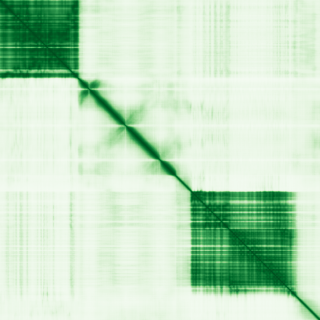
Predicted protein structure

Clinical relevance (Genomics England PanelApp)

Diagnostic Grade (Green)

  • Fetal anomalies

    MONOALLELIC, autosomal or pseudoautosomal, NOT imprinted
  • Early onset or syndromic epilepsy

    MONOALLELIC, autosomal or pseudoautosomal, NOT imprinted
  • Intellectual disability

    MONOALLELIC, autosomal or pseudoautosomal, NOT imprinted
  • DDG2P

    MONOALLELIC, autosomal or pseudoautosomal, imprinted status unknown

Disease associations (Open Targets)

  • Chilton-Okur-Chung neurodevelopmental syndrome

    0.78
  • neurodegenerative disease

    0.46
  • hereditary disease

    0.42
  • neurodevelopmental disorder

    0.31
  • autism spectrum disorder

    0.30
  • brain cancer

    0.22
  • nervous system cancer

    0.22
  • placenta praevia

    0.18
  • Parkinson disease

    0.14
  • peripheral nervous system disorder

    0.13

Score is the Open Targets composite evidence score (0-1). Higher = stronger gene-disease association.

Protein function (UniProt)

Serine/threonine-protein kinase MRCK beta

Serine/threonine-protein kinase which is an important downstream effector of CDC42 and plays a role in the regulation of cytoskeleton reorganization and cell migration. Regulates actin cytoskeletal reorganization via phosphorylation of PPP1R12C and MYL9/MLC2 (PubMed:21457715, PubMed:21949762). In concert with MYO18A and LURAP1, is involved in modulating lamellar actomyosin retrograde flow that is crucial to cell protrusion and migration (PubMed:18854160). Phosphorylates PPP1R12A (PubMed:21457715). In concert with FAM89B/LRAP25 mediates the targeting of LIMK1 to the lamellipodium resulting in its activation and subsequent phosphorylation of CFL1 which is important for lamellipodial F-actin regulation (By similarity)

Data sources: HGNC (CC BY 4.0), AlphaFold (CC BY 4.0, Jumper et al. Nature 2021), Genomics England PanelApp (CC BY 4.0), ClinGen, Open Targets (CC0), UniProt.

Not for sole clinical decision-making. Always verify against primary sources.