Skip to content
GenoLensGenoLens

CDC73

Chr 1q31.2

cell division cycle 73

Aliases:
parafibromin, FIHP
MANE:
ENST00000367435.5

Annotations refreshed 1 month ago.

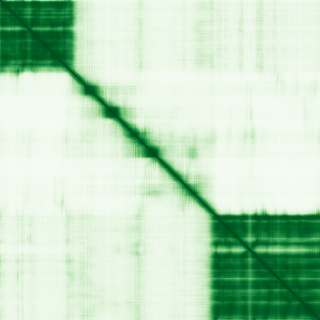
Predicted protein structure

Clinical relevance (Genomics England PanelApp)

Diagnostic Grade (Green)

  • Adult solid tumours cancer susceptibility

    MONOALLELIC, autosomal or pseudoautosomal, imprinted status unknown
  • Adult solid tumours for rare disease

    MONOALLELIC, autosomal or pseudoautosomal, imprinted status unknown
  • Childhood solid tumours

    MONOALLELIC, autosomal or pseudoautosomal, NOT imprinted
  • Endocrine neoplasia

    MONOALLELIC, autosomal or pseudoautosomal, NOT imprinted
  • Familial hyperparathyroidism or hypocalciuric hypercalcaemia

    MONOALLELIC, autosomal or pseudoautosomal, imprinted status unknown
  • Inherited parathyroid cancer

    MONOALLELIC, autosomal or pseudoautosomal, imprinted status unknown
  • Multiple endocrine tumours

    MONOALLELIC, autosomal or pseudoautosomal, NOT imprinted
  • Parathyroid Cancer

    MONOALLELIC, autosomal or pseudoautosomal, NOT imprinted

+1 more panels — install the extension to see the full list inline on any page.

Disease associations (Open Targets)

  • parathyroid gland carcinoma

    0.80
  • hyperparathyroidism 2 with jaw tumors

    0.79
  • familial isolated hyperparathyroidism

    0.74
  • Hyperparathyroidism-jaw tumor syndrome

    0.70
  • hyperparathyroidism

    0.60
  • hereditary neoplastic syndrome

    0.56
  • Inherited cancer-predisposing syndrome

    0.55
  • malignant endocrine neoplasm

    0.46
  • familial primary hyperparathyroidism

    0.46
  • parathyroid gland adenoma

    0.45

Score is the Open Targets composite evidence score (0-1). Higher = stronger gene-disease association.

Protein function (UniProt)

Parafibromin

Tumor suppressor probably involved in transcriptional and post-transcriptional control pathways. May be involved in cell cycle progression through the regulation of cyclin D1/PRAD1 expression. Component of the PAF1 complex (PAF1C) which has multiple functions during transcription by RNA polymerase II and is implicated in regulation of development and maintenance of embryonic stem cell pluripotency. PAF1C associates with RNA polymerase II through interaction with POLR2A CTD non-phosphorylated and 'Ser-2'- and 'Ser-5'-phosphorylated forms and is involved in transcriptional elongation, acting both independently and synergistically with TCEA1 and in cooperation with the DSIF complex and HTATSF1. PAF1C is required for transcription of Hox and Wnt target genes. PAF1C is involved in hematopoiesis and stimulates transcriptional activity of KMT2A/MLL1; it promotes leukemogenesis through association with KMT2A/MLL1-rearranged oncoproteins, such as KMT2A/MLL1-MLLT3/AF9 and KMT2A/MLL1-MLLT1/ENL. PAF1C is involved in histone modifications such as ubiquitination of histone H2B and methylation on histone H3 'Lys-4' (H3K4me3). PAF1C recruits the RNF20/40 E3 ubiquitin-protein ligase complex and the E2 enzyme UBE2A or UBE2B to chromatin which mediate monoubiquitination of 'Lys-120' of histone H2B (H2BK120ub1); UB2A/B-mediated H2B ubiquitination is proposed to be coupled to transcription. PAF1C is involved in mRNA 3' end formation probably through association with cleavage and poly(A) factors. In case of infection by influenza A strain H3N2, PAF1C associates with viral NS1 protein, thereby regulating gene transcription. Connects PAF1C with the cleavage and polyadenylation specificity factor (CPSF) complex and the cleavage stimulation factor (CSTF) complex, and with Wnt signaling. Involved in polyadenylation of mRNA precursors

Curated MONDO disease pages that list CDC73 among their top associated genes.

Data sources: HGNC (CC BY 4.0), AlphaFold (CC BY 4.0, Jumper et al. Nature 2021), Genomics England PanelApp (CC BY 4.0), ClinGen, Open Targets (CC0), UniProt.

Not for sole clinical decision-making. Always verify against primary sources.