
AlphaFold predicted structure
CDCA7 · Q9BWT1
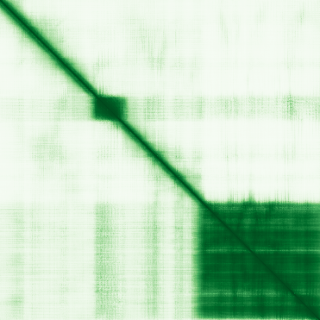
Mean pLDDT
68.8/ 100
Low
371 residues
Confidence breakdown
- Very high(≥ 90)33%
- Confident(70–90)14%
- Low(50–70)23%
- Very low(< 50)31%
Open interactive 3D viewer
AlphaFold (Jumper et al., 2021) · CC BY 4.0
cell division cycle associated 7
Annotations refreshed 3 months ago.
Diagnostic Grade (Green)
COVID-19 research
BIALLELIC, autosomal or pseudoautosomalPrimary immunodeficiency or monogenic inflammatory bowel disease
BIALLELIC, autosomal or pseudoautosomalICF syndrome
prostate carcinoma
Recurrent respiratory infections
Abnormal intestine morphology
immunodeficiency-centromeric instability-facial anomalies syndrome
breast carcinoma
breast cancer
androgenetic alopecia
alopecia
ovarian carcinoma
Score is the Open Targets composite evidence score (0-1). Higher = stronger gene-disease association.
Cell division cycle-associated protein 7
Participates in MYC-mediated cell transformation and apoptosis; induces anchorage-independent growth and clonogenicity in lymphoblastoid cells. Insufficient to induce tumorigenicity when overexpressed but contributes to MYC-mediated tumorigenesis (PubMed:11598121, PubMed:15994934, PubMed:23166294). Also functions as a critical cofactor for the chromatin remodeler HELLS, facilitating its recruitment to specific genomic regions to maintain DNA methylation patterns and heterochromatin integrity. Recognizes hemimethylated CpG within nucleosomes where it recruits HELLS to remodel chromatin and facilitate access of de novo DNA methyltransferases to heterochromatic regions, enabling proper establishment of DNA methylation patterns (PubMed:30307408, PubMed:39178260). May play a role as transcriptional regulator (PubMed:16580749)
CDCA7 · Q9BWT1
Mean pLDDT
68.8/ 100
Low
371 residues
Confidence breakdown
AlphaFold (Jumper et al., 2021) · CC BY 4.0