
AlphaFold predicted structure
CDK5RAP2 · Q96SN8
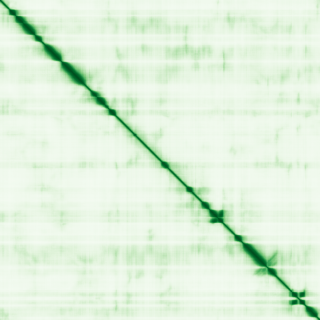
Mean pLDDT
59.1/ 100
Low
1,893 residues
Confidence breakdown
- Very high(≥ 90)3%
- Confident(70–90)44%
- Low(50–70)10%
- Very low(< 50)44%
Open interactive 3D viewer
AlphaFold (Jumper et al., 2021) · CC BY 4.0
CDK5 regulatory subunit associated protein 2
Annotations refreshed 3 months ago.
Diagnostic Grade (Green)
DDG2P
BIALLELIC, autosomal or pseudoautosomalFetal anomalies
BIALLELIC, autosomal or pseudoautosomalIntellectual disability
BIALLELIC, autosomal or pseudoautosomalSevere microcephaly
BIALLELIC, autosomal or pseudoautosomalStructural eye disease
BIALLELIC, autosomal or pseudoautosomalautosomal recessive primary microcephaly
Primary microcephaly
hereditary disease
bipolar disorder
neurodegenerative disease
microcephaly
rheumatoid arthritis
placental abruption
neutropenia
urethral syndrome
Score is the Open Targets composite evidence score (0-1). Higher = stronger gene-disease association.
CDK5 regulatory subunit-associated protein 2
Potential regulator of CDK5 activity via its interaction with CDK5R1 (PubMed:15164053). Negative regulator of centriole disengagement (licensing) which maintains centriole engagement and cohesion. Involved in regulation of mitotic spindle orientation (By similarity). Plays a role in the spindle checkpoint activation by acting as a transcriptional regulator of both BUBR1 and MAD2 promoter (PubMed:19282672). Together with EB1/MAPRE1, may promote microtubule polymerization, bundle formation, growth and dynamics at the plus ends (PubMed:18042621, PubMed:17959831, PubMed:19553473). Regulates centrosomal maturation by recruitment of the gamma-tubulin ring complex (gTuRC) onto centrosomes (PubMed:18042621, PubMed:17959831, PubMed:26485573, PubMed:39321809). In complex with PDE4DIP isoform 13/MMG8/SMYLE, MAPRE1 and AKAP9, contributes to microtubules nucleation and extension from the centrosome to the cell periphery (PubMed:29162697). Required for the recruitment of AKAP9 to centrosomes (PubMed:29162697). Plays a role in neurogenesis (By similarity)
CDK5RAP2 · Q96SN8
Mean pLDDT
59.1/ 100
Low
1,893 residues
Confidence breakdown
AlphaFold (Jumper et al., 2021) · CC BY 4.0