
AlphaFold predicted structure
CDX2 · Q99626
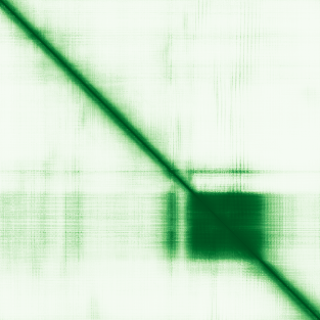
Mean pLDDT
61.6/ 100
Low
313 residues
Confidence breakdown
- Very high(≥ 90)19%
- Confident(70–90)7%
- Low(50–70)36%
- Very low(< 50)38%
Open interactive 3D viewer
AlphaFold (Jumper et al., 2021) · CC BY 4.0
caudal type homeobox 2
Annotations refreshed 3 months ago.
Diagnostic Grade (Green)
Fetal anomalies
MONOALLELIC, autosomal or pseudoautosomal, NOT imprintedLimb disorders
MONOALLELIC, autosomal or pseudoautosomal, NOT imprintedVACTERL-like phenotypes
MONOALLELIC, autosomal or pseudoautosomal, NOT imprintedNon-syndromic familial congenital anorectal malformations
BIALLELIC, autosomal or pseudoautosomalneurodegenerative disease
multiple congenital anomalies/dysmorphic syndrome-intellectual disability
lung carcinoma
gastrointestinal stromal tumor
nodular malignant melanoma
superficial spreading melanoma
endometrial endometrioid adenocarcinoma
breast carcinoma
gastric carcinoma
esophageal adenocarcinoma
Score is the Open Targets composite evidence score (0-1). Higher = stronger gene-disease association.
Homeobox protein CDX-2
Transcription factor which regulates the transcription of multiple genes expressed in the intestinal epithelium (By similarity). Binds to the promoter of the intestinal sucrase-isomaltase SI and activates SI transcription (By similarity). Binds to the DNA sequence 5'-ATAAAAACTTAT-3' in the promoter region of VDR and activates VDR transcription (By similarity). Binds to and activates transcription of LPH (By similarity). Activates transcription of CLDN2 and intestinal mucin MUC2 (By similarity). Binds to the 5'-AATTTTTTACAACACCT-3' DNA sequence in the promoter region of CA1 and activates CA1 transcription (By similarity). Important in broad range of functions from early differentiation to maintenance of the intestinal epithelial lining of both the small and large intestine. Binds preferentially to methylated DNA (PubMed:28473536)
CDX2 · Q99626
Mean pLDDT
61.6/ 100
Low
313 residues
Confidence breakdown
AlphaFold (Jumper et al., 2021) · CC BY 4.0