
AlphaFold predicted structure
CEP152 · O94986
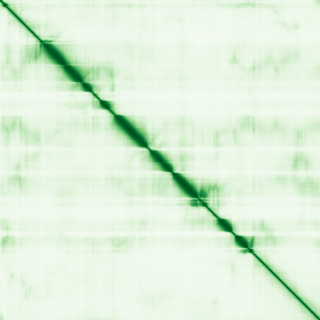
Mean pLDDT
60.5/ 100
Low
1,710 residues
Confidence breakdown
- Very high(≥ 90)22%
- Confident(70–90)25%
- Low(50–70)10%
- Very low(< 50)43%
Open interactive 3D viewer
AlphaFold (Jumper et al., 2021) · CC BY 4.0
centrosomal protein 152
Annotations refreshed 2 months ago.
Diagnostic Grade (Green)
DDG2P
BIALLELIC, autosomal or pseudoautosomalFetal anomalies
BIALLELIC, autosomal or pseudoautosomalIntellectual disability
BIALLELIC, autosomal or pseudoautosomalSevere microcephaly
BIALLELIC, autosomal or pseudoautosomalCerebral vascular malformations
BIALLELIC, autosomal or pseudoautosomalSeckel syndrome 5
autosomal recessive primary microcephaly
microcephaly 9, primary, autosomal recessive
Seckel syndrome
neurodegenerative disease
microcephalic primordial dwarfism
hereditary disease
Primary microcephaly
microcephaly with or without short stature
Marfan syndrome
Score is the Open Targets composite evidence score (0-1). Higher = stronger gene-disease association.
Centrosomal protein of 152 kDa
Necessary for centrosome duplication; the function also seems to involve CEP63, CDK5RAP2 and WDR62 through a stepwise assembled complex at the centrosome that recruits CDK2 required for centriole duplication (PubMed:26297806). Acts as a molecular scaffold facilitating the interaction of PLK4 and CPAP, 2 molecules involved in centriole formation (PubMed:20852615, PubMed:21059844). Proposed to snatch PLK4 away from PLK4:CEP92 complexes in early G1 daughter centriole and to reposition PLK4 at the outer boundary of a newly forming CEP152 ring structure (PubMed:24997597). Also plays a key role in deuterosome-mediated centriole amplification in multiciliated that can generate more than 100 centrioles (By similarity). Overexpression of CEP152 can drive amplification of centrioles (PubMed:20852615)
CEP152 · O94986
Mean pLDDT
60.5/ 100
Low
1,710 residues
Confidence breakdown
AlphaFold (Jumper et al., 2021) · CC BY 4.0