AlphaFold predicted structure
CEP63 · Q96MT8
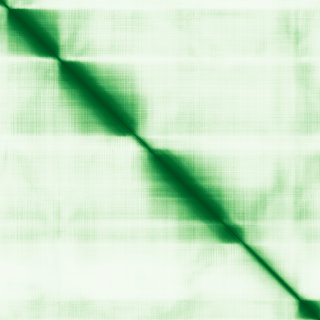
Mean pLDDT
77.3/ 100
Confident
703 residues
Confidence breakdown
- Very high(≥ 90)58%
- Confident(70–90)11%
- Low(50–70)7%
- Very low(< 50)23%
AlphaFold (Jumper et al., 2021) · CC BY 4.0
centrosomal protein 63
Annotations refreshed 9 hours ago.
Diagnostic Grade (Green)
DDG2P
BIALLELIC, autosomal or pseudoautosomalFetal anomalies
BIALLELIC, autosomal or pseudoautosomalIntellectual disability
BOTH monoallelic and biallelic, autosomal or pseudoautosomalCerebral vascular malformations
BIALLELIC, autosomal or pseudoautosomalSevere microcephaly
BIALLELIC, autosomal or pseudoautosomalSeckel syndrome 6
Seckel syndrome
hereditary disease
microcephalic primordial dwarfism
neurodegenerative disease
smoking behavior
preeclampsia
smoking initiation
Thromboembolism
depressive disorder
Score is the Open Targets composite evidence score (0-1). Higher = stronger gene-disease association.
Centrosomal protein of 63 kDa
Required for normal spindle assembly (PubMed:21406398, PubMed:21983783, PubMed:26297806, PubMed:35793002). Plays a key role in mother-centriole-dependent centriole duplication; the function seems also to involve CEP152, CDK5RAP2 and WDR62 through a stepwise assembled complex at the centrosome that recruits CDK2 required for centriole duplication (PubMed:21983783, PubMed:26297806). Reported to be required for centrosomal recruitment of CEP152; however, this function has been questioned (PubMed:21983783, PubMed:26297806). Also recruits CDK1 to centrosomes (PubMed:21406398). Plays a role in DNA damage response (PubMed:21406398). Following DNA damage, such as double-strand breaks (DSBs), is removed from centrosomes; this leads to the inactivation of spindle assembly and delay in mitotic progression (PubMed:21406398). Promotes stabilization of FXR1 protein by inhibiting FXR1 ubiquitination (PubMed:35989368)
CEP63 · Q96MT8

Mean pLDDT
77.3/ 100
Confident
703 residues
Confidence breakdown
AlphaFold (Jumper et al., 2021) · CC BY 4.0