
AlphaFold predicted structure
CFD · P00746
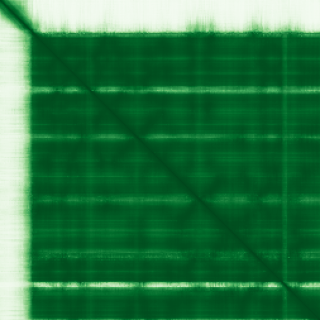
Mean pLDDT
91.0/ 100
Very high
253 residues
Confidence breakdown
- Very high(≥ 90)79%
- Confident(70–90)10%
- Low(50–70)6%
- Very low(< 50)5%
Open interactive 3D viewer
AlphaFold (Jumper et al., 2021) · CC BY 4.0
complement factor D
Annotations refreshed 2 months ago.
Diagnostic Grade (Green)
COVID-19 research
BIALLELIC, autosomal or pseudoautosomalPrimary immunodeficiency or monogenic inflammatory bowel disease
BIALLELIC, autosomal or pseudoautosomalrecurrent Neisseria infections due to factor D deficiency
paroxysmal nocturnal hemoglobinuria
complement deficiency
hemolysis
Guillouet-Gordon syndrome
atrophic macular degeneration
neurodegenerative disease
gastrointestinal disease
age-related macular degeneration
macular degeneration
Score is the Open Targets composite evidence score (0-1). Higher = stronger gene-disease association.
Complement factor D
Serine protease that initiates the alternative pathway of the complement system, a cascade of proteins that leads to phagocytosis and breakdown of pathogens and signaling that strengthens the adaptive immune system (PubMed:21205667, PubMed:22362762, PubMed:6769474, PubMed:874324, PubMed:9748277). In contrast to other complement pathways (classical, lectin and GZMK) that are directly activated by pathogens or antigen-antibody complexes, the alternative complement pathway is initiated by the spontaneous hydrolysis of complement C3 (PubMed:21205667, PubMed:22362762, PubMed:6769474, PubMed:874324). The alternative complement pathway acts as an amplification loop that enhances complement activation by mediating the formation of C3 and C5 convertases (PubMed:21205667, PubMed:22362762, PubMed:6769474, PubMed:874324). Activated CFD cleaves factor B (CFB) when the latter is complexed with complement C3b, activating the C3 convertase of the alternative pathway (PubMed:21205667, PubMed:6769474, PubMed:874324, PubMed:9748277)
CFD · P00746
Mean pLDDT
91.0/ 100
Very high
253 residues
Confidence breakdown
AlphaFold (Jumper et al., 2021) · CC BY 4.0