
AlphaFold predicted structure
CFH · P08603
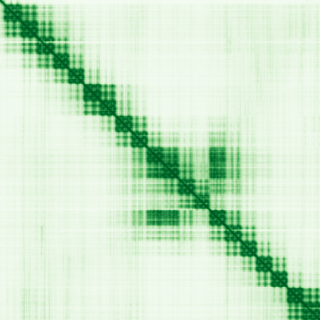
Mean pLDDT
78.3/ 100
Confident
1,231 residues
Confidence breakdown
- Very high(≥ 90)1%
- Confident(70–90)85%
- Low(50–70)12%
- Very low(< 50)2%
Open interactive 3D viewer
AlphaFold (Jumper et al., 2021) · CC BY 4.0
complement factor H
Annotations refreshed 3 months ago.
Diagnostic Grade (Green)
Atypical haemolytic uraemic syndrome
BOTH monoallelic and biallelic, autosomal or pseudoautosomalCOVID-19 research
BOTH monoallelic and biallelic, autosomal or pseudoautosomalMembranoproliferative glomerulonephritis including C3 glomerulopathy
BIALLELIC, autosomal or pseudoautosomalPrimary immunodeficiency or monogenic inflammatory bowel disease
BOTH monoallelic and biallelic, autosomal or pseudoautosomalRetinal disorders
MONOALLELIC, autosomal or pseudoautosomal, imprinted status unknownUnexplained kidney failure in young people
BOTH monoallelic and biallelic, autosomal or pseudoautosomalcomplement factor H deficiency
age-related macular degeneration
atypical hemolytic-uremic syndrome
age related macular degeneration 4
Familial drusen
retinal disorder
degeneration of macula and posterior pole
macular degeneration
dense deposit disease
wet macular degeneration
Score is the Open Targets composite evidence score (0-1). Higher = stronger gene-disease association.
Complement factor H
Glycoprotein that plays an essential role in maintaining a well-balanced immune response by modulating complement activation. Acts as a soluble inhibitor of complement, where its binding to self markers such as glycan structures prevents complement activation and amplification on cell surfaces (PubMed:21285368, PubMed:21317894, PubMed:25402769). Accelerates the decay of the complement alternative pathway (AP) C3 convertase C3bBb, thus preventing local formation of more C3b, the central player of the complement amplification loop (PubMed:19503104, PubMed:21317894, PubMed:26700768). As a cofactor of the serine protease factor I, CFH also regulates proteolytic degradation of already-deposited C3b (PubMed:18252712, PubMed:23332154, PubMed:28671664). In addition, mediates several cellular responses through interaction with specific receptors. For example, interacts with CR3/ITGAM receptor and thereby mediates the adhesion of human neutrophils to different pathogens. In turn, these pathogens are phagocytosed and destroyed (PubMed:20008295, PubMed:9558116)
Curated MONDO disease pages that list CFH among their top associated genes.
CFH · P08603
Mean pLDDT
78.3/ 100
Confident
1,231 residues
Confidence breakdown
AlphaFold (Jumper et al., 2021) · CC BY 4.0