
AlphaFold predicted structure
CFHR5 · Q9BXR6
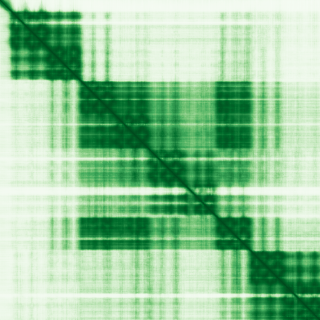
Mean pLDDT
83.8/ 100
Confident
569 residues
Confidence breakdown
- Very high(≥ 90)40%
- Confident(70–90)48%
- Low(50–70)9%
- Very low(< 50)3%
Open interactive 3D viewer
AlphaFold (Jumper et al., 2021) · CC BY 4.0
complement factor H related 5
Annotations refreshed 3 months ago.
Diagnostic Grade (Green)
COVID-19 research
BOTH monoallelic and biallelic, autosomal or pseudoautosomalMembranoproliferative glomerulonephritis including C3 glomerulopathy
MONOALLELIC, autosomal or pseudoautosomal, imprinted status unknownUnexplained kidney failure in young people
MONOALLELIC, autosomal or pseudoautosomal, NOT imprintedAtypical haemolytic uraemic syndrome
MONOALLELIC, autosomal or pseudoautosomal, NOT imprintedHaematuria
MONOALLELIC, autosomal or pseudoautosomal, NOT imprintedPrimary immunodeficiency or monogenic inflammatory bowel disease
BOTH monoallelic and biallelic, autosomal or pseudoautosomalC3 glomerulonephritis
chronic kidney disease
complement 3 glomerulopathy
primary membranoproliferative glomerulonephritis
stage 5 chronic kidney disease
age-related macular degeneration
macular degeneration
Proteinuria
atypical hemolytic-uremic syndrome with anti-factor H antibodies
complement deficiency
Score is the Open Targets composite evidence score (0-1). Higher = stronger gene-disease association.
Complement factor H-related protein 5
Involved in complement regulation. The dimerized forms have avidity for tissue-bound complement fragments and efficiently compete with the physiological complement inhibitor CFH
CFHR5 · Q9BXR6
Mean pLDDT
83.8/ 100
Confident
569 residues
Confidence breakdown
AlphaFold (Jumper et al., 2021) · CC BY 4.0