
AlphaFold predicted structure
CHD1 · O14646
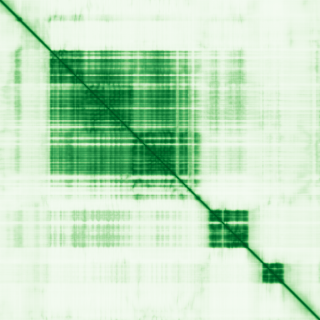
Mean pLDDT
62.1/ 100
Low
1,710 residues
Confidence breakdown
- Very high(≥ 90)9%
- Confident(70–90)42%
- Low(50–70)10%
- Very low(< 50)40%
Open interactive 3D viewer
AlphaFold (Jumper et al., 2021) · CC BY 4.0
chromodomain helicase DNA binding protein 1
Annotations refreshed 2 months ago.
Diagnostic Grade (Green)
DDG2P
MONOALLELIC, autosomal or pseudoautosomal, imprinted status unknownIntellectual disability
MONOALLELIC, autosomal or pseudoautosomal, NOT imprintedClefting
intellectual disability with language impairment
breast carcinoma
gestational diabetes
nervous system disorder
colorectal cancer
carbuncle
Furuncle
colorectal adenoma
Alzheimer disease
gastroesophageal reflux disease
Score is the Open Targets composite evidence score (0-1). Higher = stronger gene-disease association.
ATP-dependent chromatin remodeler CHD1
ATP-dependent chromatin-remodeling factor which functions as substrate recognition component of the transcription regulatory histone acetylation (HAT) complex SAGA. Regulates polymerase II transcription. Also required for efficient transcription by RNA polymerase I, and more specifically the polymerase I transcription termination step. Regulates negatively DNA replication. Not only involved in transcription-related chromatin-remodeling, but also required to maintain a specific chromatin configuration across the genome. Is also associated with histone deacetylase (HDAC) activity (By similarity). Required for the bridging of SNF2, the FACT complex, the PAF complex as well as the U2 snRNP complex to H3K4me3. Functions to modulate the efficiency of pre-mRNA splicing in part through physical bridging of spliceosomal components to H3K4me3 (PubMed:18042460, PubMed:28866611). Required for maintaining open chromatin and pluripotency in embryonic stem cells (By similarity)
CHD1 · O14646
Mean pLDDT
62.1/ 100
Low
1,710 residues
Confidence breakdown
AlphaFold (Jumper et al., 2021) · CC BY 4.0