
AlphaFold predicted structure
CHD3 · Q12873
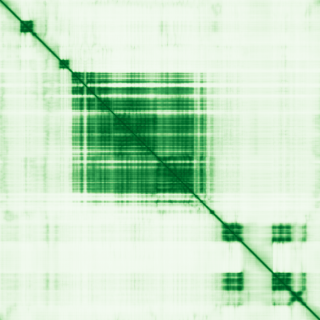
Mean pLDDT
62.4/ 100
Low
2,000 residues
Confidence breakdown
- Very high(≥ 90)14%
- Confident(70–90)36%
- Low(50–70)11%
- Very low(< 50)39%
Open interactive 3D viewer
AlphaFold (Jumper et al., 2021) · CC BY 4.0
chromodomain helicase DNA binding protein 3
Annotations refreshed 2 months ago.
Diagnostic Grade (Green)
DDG2P
MONOALLELIC, autosomal or pseudoautosomal, imprinted status unknownIntellectual disability
MONOALLELIC, autosomal or pseudoautosomal, imprinted status unknownFetal anomalies
MONOALLELIC, autosomal or pseudoautosomal, NOT imprintedClefting
MONOALLELIC, autosomal or pseudoautosomal, NOT imprintedRare syndromic craniosynostosis or isolated multisuture synostosis
MONOALLELIC, autosomal or pseudoautosomal, imprinted status unknownSnijders Blok-Campeau syndrome
hereditary disease
Intellectual disability
Global developmental delay
neurodegenerative disease
Macrocephaly
Neurodevelopmental abnormality
marfanoid habitus and intellectual disability
hypertensive disorder
smoking initiation
Score is the Open Targets composite evidence score (0-1). Higher = stronger gene-disease association.
ATP-dependent chromatin remodeler CHD3
ATP-dependent chromatin-remodeling factor that binds and distorts nucleosomal DNA (PubMed:28977666). Acts as a component of the histone deacetylase NuRD complex which participates in the remodeling of chromatin (PubMed:16428440, PubMed:28977666, PubMed:30397230, PubMed:9804427). Involved in transcriptional repression as part of the NuRD complex (PubMed:27068747). Required for anchoring centrosomal pericentrin in both interphase and mitosis, for spindle organization and centrosome integrity (PubMed:17626165)
CHD3 · Q12873
Mean pLDDT
62.4/ 100
Low
2,000 residues
Confidence breakdown
AlphaFold (Jumper et al., 2021) · CC BY 4.0