
AlphaFold predicted structure
CHD5 · Q8TDI0
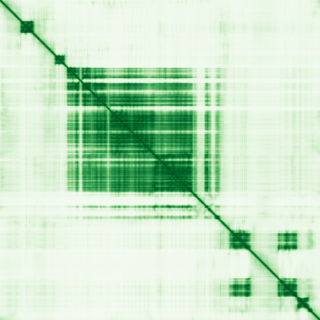
Mean pLDDT
62.0/ 100
Low
1,954 residues
Confidence breakdown
- Very high(≥ 90)15%
- Confident(70–90)36%
- Low(50–70)9%
- Very low(< 50)40%
Open interactive 3D viewer
AlphaFold (Jumper et al., 2021) · CC BY 4.0
chromodomain helicase DNA binding protein 5
Annotations refreshed 2 months ago.
Diagnostic Grade (Green)
Early onset or syndromic epilepsy
MONOALLELIC, autosomal or pseudoautosomal, NOT imprintedIntellectual disability
MONOALLELIC, autosomal or pseudoautosomal, NOT imprintedRare syndromic craniosynostosis or isolated multisuture synostosis
MONOALLELIC, autosomal or pseudoautosomal, NOT imprintedDDG2P
MONOALLELIC, autosomal or pseudoautosomal, imprinted status unknownparenti-mignot neurodevelopmental syndrome
Intellectual disability
epilepsy
Global developmental delay
Seizure
complex neurodevelopmental disorder
hereditary disease
neurodevelopmental disorder
diabetes mellitus
Neurodevelopmental delay
Score is the Open Targets composite evidence score (0-1). Higher = stronger gene-disease association.
Guided entry of tail-anchored proteins factor 1
Required for the post-translational delivery of tail-anchored (TA) proteins to the endoplasmic reticulum (ER) (PubMed:21444755, PubMed:23041287, PubMed:24392163, PubMed:27226539). Together with CAMLG/GET2, acts as a membrane receptor for soluble GET3/TRC40, which recognizes and selectively binds the transmembrane domain of TA proteins in the cytosol (PubMed:21444755, PubMed:23041287, PubMed:24392163, PubMed:27226539). Required to ensure correct topology and ER insertion of CAMLG (PubMed:31417168, PubMed:32187542)
CHD5 · Q8TDI0
Mean pLDDT
62.0/ 100
Low
1,954 residues
Confidence breakdown
AlphaFold (Jumper et al., 2021) · CC BY 4.0