
AlphaFold predicted structure
CHD8 · Q9HCK8
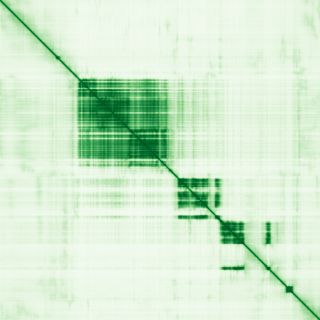
Mean pLDDT
53.9/ 100
Low
2,581 residues
Confidence breakdown
- Very high(≥ 90)6%
- Confident(70–90)33%
- Low(50–70)9%
- Very low(< 50)52%
Open interactive 3D viewer
AlphaFold (Jumper et al., 2021) · CC BY 4.0
chromodomain helicase DNA binding protein 8
Annotations refreshed 2 months ago.
Diagnostic Grade (Green)
Beckwith-Wiedemann syndrome (BWS) and other congenital overgrowth disorders
MONOALLELIC, autosomal or pseudoautosomal, imprinted status unknownDDG2P
MONOALLELIC, autosomal or pseudoautosomal, imprinted status unknownIntellectual disability
MONOALLELIC, autosomal or pseudoautosomal, NOT imprintedFetal anomalies
MONOALLELIC, autosomal or pseudoautosomal, NOT imprintedautism
hereditary disease
autism spectrum disorder
Intellectual disability
neurodevelopmental disorder
complex neurodevelopmental disorder
Macrocephaly
Neurodevelopmental delay
developmental disability
Fatigable weakness
Score is the Open Targets composite evidence score (0-1). Higher = stronger gene-disease association.
ATP-dependent chromatin remodeler CHD8
ATP-dependent chromatin-remodeling factor, it slides nucleosomes along DNA; nucleosome sliding requires ATP (PubMed:28533432). Acts as a transcription repressor by remodeling chromatin structure and recruiting histone H1 to target genes. Suppresses p53/TP53-mediated apoptosis by recruiting histone H1 and preventing p53/TP53 transactivation activity. Acts as a negative regulator of Wnt signaling pathway by regulating beta-catenin (CTNNB1) activity. Negatively regulates CTNNB1-targeted gene expression by being recruited specifically to the promoter regions of several CTNNB1 responsive genes. Involved in both enhancer blocking and epigenetic remodeling at chromatin boundary via its interaction with CTCF. Acts as a suppressor of STAT3 activity by suppressing the LIF-induced STAT3 transcriptional activity. Also acts as a transcription activator via its interaction with ZNF143 by participating in efficient U6 RNA polymerase III transcription. Regulates alternative splicing of a core group of genes involved in neuronal differentiation, cell cycle and DNA repair. Enables H3K36me3-coupled transcription elongation and co-transcriptional RNA processing likely via interaction with HNRNPL
Curated MONDO disease pages that list CHD8 among their top associated genes.
CHD8 · Q9HCK8
Mean pLDDT
53.9/ 100
Low
2,581 residues
Confidence breakdown
AlphaFold (Jumper et al., 2021) · CC BY 4.0