
AlphaFold predicted structure
CHM · P24386
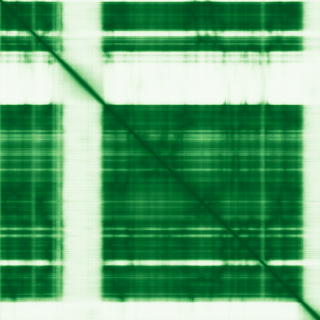
Mean pLDDT
80.3/ 100
Confident
653 residues
Confidence breakdown
- Very high(≥ 90)65%
- Confident(70–90)10%
- Low(50–70)4%
- Very low(< 50)22%
Open interactive 3D viewer
AlphaFold (Jumper et al., 2021) · CC BY 4.0
CHM Rab escort protein
Annotations refreshed 2 months ago.
Diagnostic Grade (Green)
DDG2P
X-LINKED: hemizygous mutation in males, biallelic mutations in femalesRetinal disorders
X-LINKED: hemizygous mutation in males, monoallelic mutations in females may cause disease (may be less severe, later onset than males)Glaucoma (developmental)
Intellectual disability
X-LINKED: hemizygous mutation in males, biallelic mutations in femalesStructural eye disease
X-LINKED: hemizygous mutation in males, monoallelic mutations in females may cause disease (may be less severe, later onset than males)Fetal anomalies
choroideremia
Retinal dystrophy
retinitis pigmentosa
eye disorder
night blindness
Chorioretinal atrophy
Abnormality of the eye
hereditary disease
cancer
Progressive cone dystrophy
Score is the Open Targets composite evidence score (0-1). Higher = stronger gene-disease association.
Rab proteins geranylgeranyltransferase component A 1
Substrate-binding subunit of the Rab geranylgeranyltransferase (GGTase) complex. Binds unprenylated Rab proteins and presents the substrate peptide to the catalytic component B composed of RABGGTA and RABGGTB, and remains bound to it after the geranylgeranyl transfer reaction. The component A is thought to be regenerated by transferring its prenylated Rab back to the donor membrane. Besides, a pre-formed complex consisting of CHM and the Rab GGTase dimer (RGGT or component B) can bind to and prenylate Rab proteins; this alternative pathway is proposed to be the predominant pathway for Rab protein geranylgeranylation
CHM · P24386
Mean pLDDT
80.3/ 100
Confident
653 residues
Confidence breakdown
AlphaFold (Jumper et al., 2021) · CC BY 4.0