AlphaFold predicted structure
CHMP4B · Q9H444
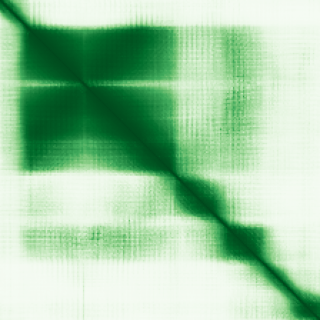
Mean pLDDT
78.9/ 100
Confident
224 residues
Confidence breakdown
- Very high(≥ 90)43%
- Confident(70–90)29%
- Low(50–70)13%
- Very low(< 50)15%
AlphaFold (Jumper et al., 2021) · CC BY 4.0
charged multivesicular body protein 4B
Annotations refreshed 9 hours ago.
Diagnostic Grade (Green)
Bilateral congenital or childhood onset cataracts
MONOALLELIC, autosomal or pseudoautosomal, imprinted status unknownStructural eye disease
MONOALLELIC, autosomal or pseudoautosomal, NOT imprintedPosterior polar cataract
early-onset non-syndromic cataract
neurodegenerative disease
viral infectious disease
HIV infectious disease
diabetes mellitus
type 2 diabetes mellitus
COVID-19
early-onset posterior polar cataract
severe acute respiratory syndrome
Score is the Open Targets composite evidence score (0-1). Higher = stronger gene-disease association.
Charged multivesicular body protein 4b
Probable core component of the endosomal sorting required for transport complex III (ESCRT-III) which is involved in multivesicular bodies (MVBs) formation and sorting of endosomal cargo proteins into MVBs. MVBs contain intraluminal vesicles (ILVs) that are generated by invagination and scission from the limiting membrane of the endosome and mostly are delivered to lysosomes enabling degradation of membrane proteins, such as stimulated growth factor receptors, lysosomal enzymes and lipids. The MVB pathway appears to require the sequential function of ESCRT-O, -I,-II and -III complexes. ESCRT-III proteins mostly dissociate from the invaginating membrane before the ILV is released (PubMed:12860994, PubMed:18209100). The ESCRT machinery also functions in topologically equivalent membrane fission events, such as the terminal stages of cytokinesis (PubMed:21310966). Together with SPAST, the ESCRT-III complex promotes nuclear envelope sealing and mitotic spindle disassembly during late anaphase (PubMed:26040712). Plays a role in the endosomal sorting pathway. ESCRT-III proteins are believed to mediate the necessary vesicle extrusion and/or membrane fission activities, possibly in conjunction with the AAA ATPase VPS4. When overexpressed, membrane-assembled circular arrays of CHMP4B filaments can promote or stabilize negative curvature and outward budding. CHMP4A/B/C are required for the exosomal release of SDCBP, CD63 and syndecan (PubMed:22660413). Majority of the protein exists in a folded closed conformation (PubMed:33349255)
CHMP4B · Q9H444

Mean pLDDT
78.9/ 100
Confident
224 residues
Confidence breakdown
AlphaFold (Jumper et al., 2021) · CC BY 4.0