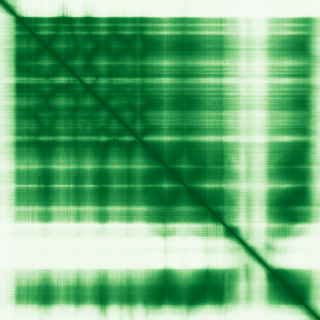
Neuronal acetylcholine receptor subunit beta-2
Component of neuronal acetylcholine receptors (nAChRs) that function as pentameric, ligand-gated cation channels with high calcium permeability among other activities. nAChRs are excitatory neurotrasnmitter receptors formed by a collection of nAChR subunits known to mediate synaptic transmission in the nervous system and the neuromuscular junction. Each nAchR subunit confers differential attributes to channel properties, including activation, deactivation and desensitization kinetics, pH sensitivity, cation permeability, and binding to allosteric modulators (PubMed:22361591, PubMed:27698419, PubMed:29720657, PubMed:38454578). CHRNB2 forms heteropentameric neuronal acetylcholine receptors with CHRNA2, CHRNA3, CHRNA4 and CHRNA6, as well as CHRNA5 and CHRNB3 as accesory subunits (PubMed:16835356, PubMed:20881005, PubMed:22361591, PubMed:27698419, PubMed:29720657, PubMed:38454578, PubMed:8663494). Found in two major stoichiometric forms,(CHRNA4)3:(CHRNB2)2 and (CHRNA4)2:(CHRNB2)3, the two stoichiometric forms differ in their unitary conductance, calcium permeability, ACh sensitivity and potentiation by divalent cation (PubMed:27698419, PubMed:29720657, PubMed:38454578). Heteropentameric channels with CHRNA6 and CHRNA4 exhibit high sensitivity to ACh and nicotine and are predominantly expressed in only a few brain areas, including dopaminergic neurons, norepirephrine neurons and cells of the visual system. nAChrs containing CHRNA6 subunits mediate endogenous cholinergic modulation of dopamine and gamma-aminobutyric acid (GABA) release in response to nicotine at nerve terminals (By similarity). Also forms functional nAChRs with other subunits such as CHRNA7:CHRNB2, mainly expressed in basal forebrain cholinergic neurons (PubMed:33239400, PubMed:38161283)