Skip to content
GenoLensGenoLens

CHRNE

Chr 17p13.2

cholinergic receptor nicotinic epsilon subunit

Aliases:
ACHRE
MANE:
ENST00000649488.2

Annotations refreshed 1 month ago.

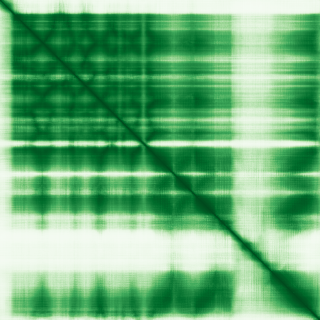
Predicted protein structure

Clinical relevance (Genomics England PanelApp)

Diagnostic Grade (Green)

  • Arthrogryposis

    BOTH monoallelic and biallelic, autosomal or pseudoautosomal
  • Congenital myaesthenic syndrome

    BOTH monoallelic and biallelic, autosomal or pseudoautosomal
  • Fetal anomalies

    BOTH monoallelic and biallelic, autosomal or pseudoautosomal
  • Paediatric pseudo-obstruction syndrome

    BOTH monoallelic and biallelic, autosomal or pseudoautosomal

Disease associations (Open Targets)

  • Congenital myasthenic syndromes

    0.82
  • Postsynaptic congenital myasthenic syndromes

    0.71
  • congenital myasthenic syndrome

    0.58
  • Bernard-Soulier syndrome

    0.58
  • platelet-type von Willebrand disease

    0.55
  • muscle cramp

    0.53
  • Muscle spasm

    0.53
  • Optic neuropathy

    0.52
  • Abnormality of the musculature

    0.50
  • Macrothrombocytopenia

    0.47

Score is the Open Targets composite evidence score (0-1). Higher = stronger gene-disease association.

Protein function (UniProt)

Acetylcholine receptor subunit epsilon

After binding acetylcholine, the AChR responds by an extensive change in conformation that affects all subunits and leads to opening of an ion-conducting channel across the plasma membrane

Data sources: HGNC (CC BY 4.0), AlphaFold (CC BY 4.0, Jumper et al. Nature 2021), Genomics England PanelApp (CC BY 4.0), ClinGen, Open Targets (CC0), UniProt.

Not for sole clinical decision-making. Always verify against primary sources.