
AlphaFold predicted structure
CHUK · O15111
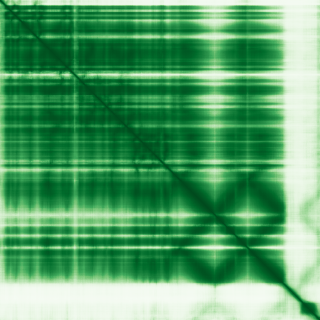
Mean pLDDT
83.8/ 100
Confident
745 residues
Confidence breakdown
- Very high(≥ 90)59%
- Confident(70–90)23%
- Low(50–70)7%
- Very low(< 50)10%
Open interactive 3D viewer
AlphaFold (Jumper et al., 2021) · CC BY 4.0
component of inhibitor of nuclear factor kappa B kinase complex
Annotations refreshed 2 months ago.
Diagnostic Grade (Green)
DDG2P
BIALLELIC, autosomal or pseudoautosomalFetal anomalies
BIALLELIC, autosomal or pseudoautosomalIntellectual disability
BIALLELIC, autosomal or pseudoautosomalPrimary immunodeficiency or monogenic inflammatory bowel disease
BIALLELIC, autosomal or pseudoautosomalcocoon syndrome
COVID-19
Bartsocas-Papas syndrome 1
neurodegenerative disease
autoimmune disorder of central nervous system
type 2 diabetes mellitus
attention deficit-hyperactivity disorder
anorexia nervosa
hereditary disease
psoriasis
Score is the Open Targets composite evidence score (0-1). Higher = stronger gene-disease association.
Inhibitor of nuclear factor kappa-B kinase subunit alpha
Serine kinase that plays an essential role in the NF-kappa-B signaling pathway which is activated by multiple stimuli such as inflammatory cytokines, bacterial or viral products, DNA damages or other cellular stresses (PubMed:18626576, PubMed:9244310, PubMed:9252186, PubMed:9346484). Acts as a part of the canonical IKK complex in the conventional pathway of NF-kappa-B activation and phosphorylates inhibitors of NF-kappa-B on serine residues (PubMed:18626576, PubMed:35952808, PubMed:9244310, PubMed:9252186, PubMed:9346484). These modifications allow polyubiquitination of the inhibitors and subsequent degradation by the proteasome (PubMed:18626576, PubMed:9244310, PubMed:9252186, PubMed:9346484). In turn, free NF-kappa-B is translocated into the nucleus and activates the transcription of hundreds of genes involved in immune response, growth control, or protection against apoptosis (PubMed:18626576, PubMed:9244310, PubMed:9252186, PubMed:9346484). Negatively regulates the pathway by phosphorylating the scaffold protein TAXBP1 and thus promoting the assembly of the A20/TNFAIP3 ubiquitin-editing complex (composed of A20/TNFAIP3, TAX1BP1, and the E3 ligases ITCH and RNF11) (PubMed:21765415). Therefore, CHUK plays a key role in the negative feedback of NF-kappa-B canonical signaling to limit inflammatory gene activation. As part of the non-canonical pathway of NF-kappa-B activation, the MAP3K14-activated CHUK/IKKA homodimer phosphorylates NFKB2/p100 associated with RelB, inducing its proteolytic processing to NFKB2/p52 and the formation of NF-kappa-B RelB-p52 complexes (PubMed:20501937). In turn, these complexes regulate genes encoding molecules involved in B-cell survival and lymphoid organogenesis. Also participates in the negative feedback of the non-canonical NF-kappa-B signaling pathway by phosphorylating and destabilizing MAP3K14/NIK. Within the nucleus, phosphorylates CREBBP and consequently increases both its transcriptional and histone acetyltransferase activities (PubMed:17434128). Modulates chromatin accessibility at NF-kappa-B-responsive promoters by phosphorylating histones H3 at 'Ser-10' that are subsequently acetylated at 'Lys-14' by CREBBP (PubMed:12789342). Additionally, phosphorylates the CREBBP-interacting protein NCOA3. Also phosphorylates FOXO3 and may regulate this pro-apoptotic transcription factor (PubMed:15084260). Phosphorylates RIPK1 at 'Ser-25' which represses its kinase activity and consequently prevents TNF-mediated RIPK1-dependent cell death (By similarity). Phosphorylates AMBRA1 following mitophagy induction, promoting AMBRA1 interaction with ATG8 family proteins and its mitophagic activity (PubMed:30217973)
CHUK · O15111
Mean pLDDT
83.8/ 100
Confident
745 residues
Confidence breakdown
AlphaFold (Jumper et al., 2021) · CC BY 4.0