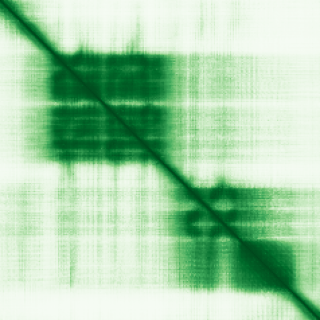
Lipid transferase CIDEC
Lipid transferase specifically expressed in white adipose tissue, which promotes unilocular lipid droplet formation by mediating lipid droplet fusion (PubMed:18334488, PubMed:19843876, PubMed:20049731, PubMed:23399566, PubMed:30361435). Lipid droplet fusion promotes their enlargement, restricting lipolysis and favoring lipid storage (PubMed:18334488, PubMed:19843876, PubMed:20049731, PubMed:23399566). Localizes on the lipid droplet surface, at focal contact sites between lipid droplets, and mediates atypical lipid droplet fusion by undergoing liquid-liquid phase separation (LLPS) and promoting directional net neutral lipid transfer from the smaller to larger lipid droplets (PubMed:18334488, PubMed:19843876, PubMed:20049731, PubMed:23399566). The transfer direction may be driven by the internal pressure difference between the contacting lipid droplet pair (PubMed:18334488, PubMed:19843876, PubMed:20049731, PubMed:23399566). Its role in neutral lipid transfer and lipid droplet enlargement is activated by the interaction with PLIN1 (PubMed:23399566). May also act as a CEBPB coactivator in the white adipose tissue to control the expression of a subset of CEBPB downstream target genes, including SOCS1, SOCS3, TGFB1, TGFBR1, ID2 and XDH (By similarity). When overexpressed in preadipocytes, induces apoptosis or increases cell susceptibility to apoptosis induced by serum deprivation or TGFB treatment (PubMed:12429024)