AlphaFold predicted structure
CLCN3 · P51790
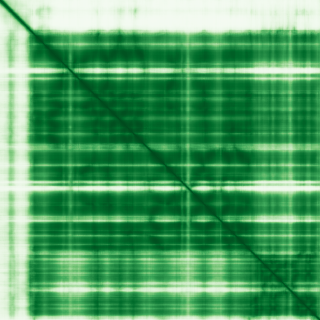
Mean pLDDT
80.0/ 100
Confident
818 residues
Confidence breakdown
- Very high(≥ 90)41%
- Confident(70–90)40%
- Low(50–70)7%
- Very low(< 50)12%
AlphaFold (Jumper et al., 2021) · CC BY 4.0
Cl-/H+ antiporter 3
Annotations refreshed 1 month ago.
Diagnostic Grade (Green)
DDG2P
MONOALLELIC, autosomal or pseudoautosomal, imprinted status unknownEarly onset or syndromic epilepsy
BOTH monoallelic and biallelic (but BIALLELIC mutations cause a more SEVERE disease form), autosomal or pseudoautosomalFetal anomalies
BOTH monoallelic and biallelic, autosomal or pseudoautosomalIntellectual disability
BOTH monoallelic and biallelic (but BIALLELIC mutations cause a more SEVERE disease form), autosomal or pseudoautosomalneurodevelopmental disorder with hypotonia and brain abnormalities
neurodevelopmental disorder with seizures and brain abnormalities
Neurodevelopmental delay
schizophrenia
complex neurodevelopmental disorder
hereditary disease
Parkinson disease
lymphoid leukemia
Juvenile Osteochondrosis
placental retention
Score is the Open Targets composite evidence score (0-1). Higher = stronger gene-disease association.
H(+)/Cl(-) exchange transporter 3
Strongly outwardly rectifying, electrogenic H(+)/Cl(-)exchanger which mediates the exchange of chloride ions against protons (By similarity). The CLC channel family contains both chloride channels and proton-coupled anion transporters that exchange chloride or another anion for protons (PubMed:29845874). The presence of conserved gating glutamate residues is typical for family members that function as antiporters (PubMed:29845874)
CLCN3 · P51790

Mean pLDDT
80.0/ 100
Confident
818 residues
Confidence breakdown
AlphaFold (Jumper et al., 2021) · CC BY 4.0