
AlphaFold predicted structure
CLCN4 · P51793
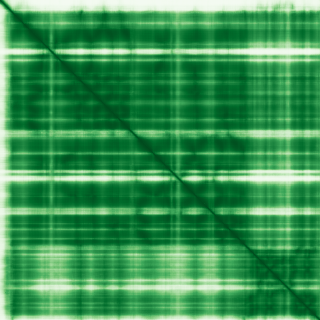
Mean pLDDT
84.8/ 100
Confident
760 residues
Confidence breakdown
- Very high(≥ 90)49%
- Confident(70–90)41%
- Low(50–70)6%
- Very low(< 50)5%
Open interactive 3D viewer
AlphaFold (Jumper et al., 2021) · CC BY 4.0
Cl-/H+ antiporter 4
Annotations refreshed 2 months ago.
Diagnostic Grade (Green)
DDG2P
X-LINKED: hemizygous mutation in males, biallelic mutations in femalesEarly onset or syndromic epilepsy
X-LINKED: hemizygous mutation in males, monoallelic mutations in females may cause disease (may be less severe, later onset than males)Fetal anomalies
X-LINKED: hemizygous mutation in males, monoallelic mutations in females may cause disease (may be less severe, later onset than males)Intellectual disability
X-LINKED: hemizygous mutation in males, monoallelic mutations in females may cause disease (may be less severe, later onset than males)X-linked non-syndromic intellectual disability
intellectual disability, X-linked 49
clcn4-related disorder
hereditary disease
non-syndromic X-linked intellectual disability
Seizure
Intellectual disability
neurodevelopmental disorder
schizophrenia
intellectual disability, X-linked 81
Score is the Open Targets composite evidence score (0-1). Higher = stronger gene-disease association.
H(+)/Cl(-) exchange transporter 4
Strongly outwardly rectifying, electrogenic H(+)/Cl(-)exchanger which mediates the exchange of chloride ions against protons (PubMed:18063579, PubMed:23647072, PubMed:25644381, PubMed:27550844, PubMed:28972156). The CLC channel family contains both chloride channels and proton-coupled anion transporters that exchange chloride or another anion for protons (PubMed:29845874). The presence of conserved gating glutamate residues is typical for family members that function as antiporters (PubMed:29845874)
CLCN4 · P51793
Mean pLDDT
84.8/ 100
Confident
760 residues
Confidence breakdown
AlphaFold (Jumper et al., 2021) · CC BY 4.0