Skip to content
GenoLensGenoLens

CLCN6

Chr 1p36.22

Cl-/H+ antiporter 6

Aliases:
CLC-6, KIAA0046, ClC-6
MANE:
ENST00000346436.11

Annotations refreshed 10 hours ago.

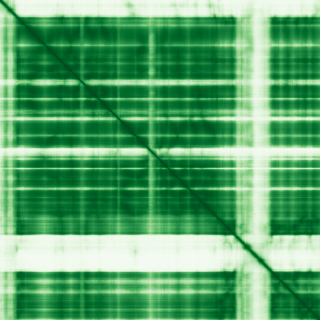
Predicted protein structure

Clinical relevance (Genomics England PanelApp)

Diagnostic Grade (Green)

  • DDG2P

    MONOALLELIC, autosomal or pseudoautosomal, imprinted status unknown
  • Intellectual disability

    MONOALLELIC, autosomal or pseudoautosomal, imprinted status unknown
  • Neuronal ceroid lipofuscinosis

    MONOALLELIC, autosomal or pseudoautosomal, imprinted status unknown
  • Early onset or syndromic epilepsy

    BIALLELIC, autosomal or pseudoautosomal
  • Likely inborn error of metabolism

    MONOALLELIC, autosomal or pseudoautosomal, imprinted status unknown

Disease associations (Open Targets)

  • neurodegeneration, childhood-onset, with hypotonia, respiratory insufficiency, and brain imaging abnormalities

    0.65
  • cancer

    0.54
  • Global developmental delay

    0.34
  • movement disorder

    0.34
  • Neurogenic bladder

    0.34
  • Abnormal speech pattern

    0.34
  • Feeding difficulties

    0.34
  • EEG abnormality

    0.34
  • Abnormality of vision

    0.34
  • Hypotonia

    0.34

Score is the Open Targets composite evidence score (0-1). Higher = stronger gene-disease association.

Protein function (UniProt)

H(+)/Cl(-) exchange transporter 6

Voltage-gated channel mediating the exchange of chloride ions against protons. Functions as antiporter and contributes to the acidification of the late endosome lumen. The CLC channel family contains both chloride channels and proton-coupled anion transporters that exchange chloride or another anion for protons. The presence of conserved gating glutamate residues is typical for family members that function as antiporters

Data sources: HGNC (CC BY 4.0), AlphaFold (CC BY 4.0, Jumper et al. Nature 2021), Genomics England PanelApp (CC BY 4.0), ClinGen, Open Targets (CC0), UniProt.

Not for sole clinical decision-making. Always verify against primary sources.