
AlphaFold predicted structure
CNOT3 · O75175
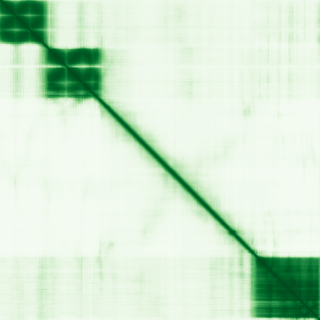
Mean pLDDT
65.4/ 100
Low
753 residues
Confidence breakdown
- Very high(≥ 90)37%
- Confident(70–90)10%
- Low(50–70)6%
- Very low(< 50)47%
Open interactive 3D viewer
AlphaFold (Jumper et al., 2021) · CC BY 4.0
CCR4-NOT transcription complex subunit 3
Annotations refreshed 3 months ago.
Diagnostic Grade (Green)
DDG2P
MONOALLELIC, autosomal or pseudoautosomal, imprinted status unknownFetal anomalies
MONOALLELIC, autosomal or pseudoautosomal, imprinted status unknownIntellectual disability
MONOALLELIC, autosomal or pseudoautosomal, imprinted status unknownCerebral vascular malformations
MONOALLELIC, autosomal or pseudoautosomal, NOT imprintedintellectual developmental disorder with speech delay, autism and dysmorphic facies
neurodegenerative disease
hereditary disease
complex neurodevelopmental disorder
neurodevelopmental disorder
T-cell acute lymphoblastic leukemia
colorectal adenocarcinoma
cutaneous melanoma
superficial spreading melanoma
nodular malignant melanoma
Score is the Open Targets composite evidence score (0-1). Higher = stronger gene-disease association.
CCR4-NOT transcription complex subunit 3
Component of the CCR4-NOT complex which is one of the major cellular mRNA deadenylases and is linked to various cellular processes including bulk mRNA degradation, miRNA-mediated repression, translational repression during translational initiation and general transcription regulation. Additional complex functions may be a consequence of its influence on mRNA expression. May be involved in metabolic regulation; may be involved in recruitment of the CCR4-NOT complex to deadenylation target mRNAs involved in energy metabolism. Involved in mitotic progression and regulation of the spindle assembly checkpoint by regulating the stability of MAD1L1 mRNA. Can repress transcription and may link the CCR4-NOT complex to transcriptional regulation; the repressive function may involve histone deacetylases. Involved in the maintenance of embryonic stem (ES) cell identity
CNOT3 · O75175
Mean pLDDT
65.4/ 100
Low
753 residues
Confidence breakdown
AlphaFold (Jumper et al., 2021) · CC BY 4.0