Skip to content
GenoLensGenoLens

CNTN1

Chr 12q12

contactin 1

Aliases:
F3, GP135
MANE:
ENST00000551295.7

Annotations refreshed 1 month ago.

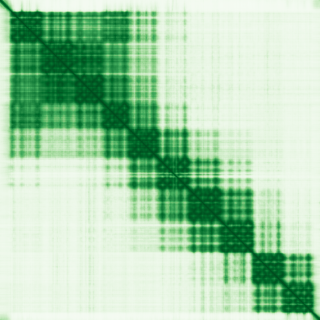
Predicted protein structure

Clinical relevance (Genomics England PanelApp)

Moderate Evidence (Amber)

  • Arthrogryposis

    BIALLELIC, autosomal or pseudoautosomal
  • Congenital myopathy

    BIALLELIC, autosomal or pseudoautosomal
  • Fetal anomalies

    BIALLELIC, autosomal or pseudoautosomal

Disease associations (Open Targets)

  • Compton-North congenital myopathy

    0.67
  • Congenital lethal myopathy, Compton-North type

    0.49
  • Parkinson disease

    0.36
  • urinary system disorder

    0.33
  • escherichia coli infection

    0.29
  • exostosis

    0.25
  • Hypercholesterolemia

    0.19
  • hereditary disease

    0.19
  • retinal disorder

    0.19
  • Precordial pain

    0.19

Score is the Open Targets composite evidence score (0-1). Higher = stronger gene-disease association.

Protein function (UniProt)

Contactin-1

Contactins mediate cell surface interactions during nervous system development. Involved in the formation of paranodal axo-glial junctions in myelinated peripheral nerves and in the signaling between axons and myelinating glial cells via its association with CNTNAP1. Participates in oligodendrocytes generation by acting as a ligand of NOTCH1. Its association with NOTCH1 promotes NOTCH1 activation through the released notch intracellular domain (NICD) and subsequent translocation to the nucleus. Interaction with TNR induces a repulsion of neurons and an inhibition of neurite outgrowth (By similarity)

Data sources: HGNC (CC BY 4.0), AlphaFold (CC BY 4.0, Jumper et al. Nature 2021), Genomics England PanelApp (CC BY 4.0), ClinGen, Open Targets (CC0), UniProt.

Not for sole clinical decision-making. Always verify against primary sources.