
AlphaFold predicted structure
COG4 · Q9H9E3
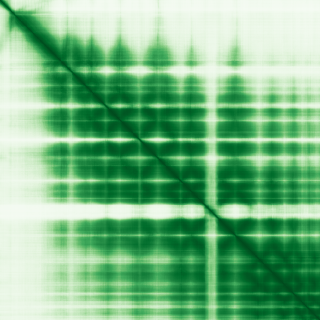
Mean pLDDT
84.9/ 100
Confident
785 residues
Confidence breakdown
- Very high(≥ 90)50%
- Confident(70–90)38%
- Low(50–70)6%
- Very low(< 50)7%
Open interactive 3D viewer
AlphaFold (Jumper et al., 2021) · CC BY 4.0
component of oligomeric golgi complex 4
Annotations refreshed 2 months ago.
Diagnostic Grade (Green)
Bilateral congenital or childhood onset cataracts
MONOALLELIC, autosomal or pseudoautosomal, NOT imprintedCongenital disorders of glycosylation
BIALLELIC, autosomal or pseudoautosomalDDG2P
BOTH monoallelic and biallelic, autosomal or pseudoautosomalFetal anomalies
BIALLELIC, autosomal or pseudoautosomalIntellectual disability
BIALLELIC, autosomal or pseudoautosomalLikely inborn error of metabolism
BIALLELIC, autosomal or pseudoautosomalMonogenic short stature
MONOALLELIC, autosomal or pseudoautosomal, imprinted status unknownSkeletal dysplasia
MONOALLELIC, autosomal or pseudoautosomal, imprinted status unknown+4 more panels — install the extension to see the full list inline on any page.
microcephalic osteodysplastic dysplasia, Saul-Wilson type
COG4-congenital disorder of glycosylation
hereditary disease
neurodegenerative disease
congenital disorder of glycosylation
Delayed gross motor development
arthropathy
pyknoachondrogenesis
X-linked osteoporosis with fractures
dentin dysplasia
Score is the Open Targets composite evidence score (0-1). Higher = stronger gene-disease association.
Conserved oligomeric Golgi complex subunit 4
Required for normal Golgi function (PubMed:19536132, PubMed:30290151). Plays a role in SNARE-pin assembly and Golgi-to-ER retrograde transport via its interaction with SCFD1 (PubMed:19536132)
COG4 · Q9H9E3
Mean pLDDT
84.9/ 100
Confident
785 residues
Confidence breakdown
AlphaFold (Jumper et al., 2021) · CC BY 4.0