
AlphaFold predicted structure
COPB1 · P53618
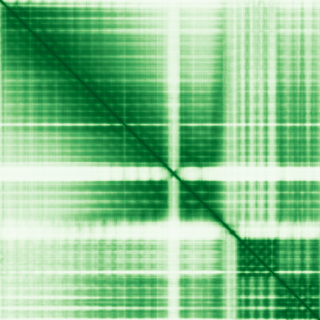
Mean pLDDT
82.3/ 100
Confident
953 residues
Confidence breakdown
- Very high(≥ 90)38%
- Confident(70–90)47%
- Low(50–70)7%
- Very low(< 50)8%
Open interactive 3D viewer
AlphaFold (Jumper et al., 2021) · CC BY 4.0
coat protein complex I subunit beta 1
Annotations refreshed 2 months ago.
Moderate Evidence (Amber)
Bilateral congenital or childhood onset cataracts
BIALLELIC, autosomal or pseudoautosomalIntellectual disability
BIALLELIC, autosomal or pseudoautosomalSevere microcephaly
BIALLELIC, autosomal or pseudoautosomalDDG2P
BIALLELIC, autosomal or pseudoautosomalBaralle-Macken syndrome
Alzheimer disease
neurodegenerative disease
multiple sclerosis
Parkinson disease
lysosomal storage disease
cataract
Severe intellectual disability
type 2 diabetes mellitus
Delayed speech and language development
Score is the Open Targets composite evidence score (0-1). Higher = stronger gene-disease association.
Coatomer subunit beta
The coatomer is a cytosolic protein complex that binds to dilysine motifs and reversibly associates with Golgi non-clathrin-coated vesicles, which further mediate biosynthetic protein transport from the ER, via the Golgi up to the trans Golgi network. Coatomer complex is required for budding from Golgi membranes, and is essential for the retrograde Golgi-to-ER transport of dilysine-tagged proteins. In mammals, the coatomer can only be recruited by membranes associated to ADP-ribosylation factors (ARFs), which are small GTP-binding proteins; the complex also influences the Golgi structural integrity, as well as the processing, activity, and endocytic recycling of LDL receptors. Plays a functional role in facilitating the transport of kappa-type opioid receptor mRNAs into axons and enhances translation of these proteins. Required for limiting lipid storage in lipid droplets. Involved in lipid homeostasis by regulating the presence of perilipin family members PLIN2 and PLIN3 at the lipid droplet surface and promoting the association of adipocyte surface triglyceride lipase (PNPLA2) with the lipid droplet to mediate lipolysis (By similarity). Involved in the Golgi disassembly and reassembly processes during cell cycle. Involved in autophagy by playing a role in early endosome function. Plays a role in organellar compartmentalization of secretory compartments including endoplasmic reticulum (ER)-Golgi intermediate compartment (ERGIC), Golgi, trans-Golgi network (TGN) and recycling endosomes, and in biosynthetic transport of CAV1. Promotes degradation of Nef cellular targets CD4 and MHC class I antigens by facilitating their trafficking to degradative compartments
COPB1 · P53618
Mean pLDDT
82.3/ 100
Confident
953 residues
Confidence breakdown
AlphaFold (Jumper et al., 2021) · CC BY 4.0