
AlphaFold predicted structure
COPB2 · P35606
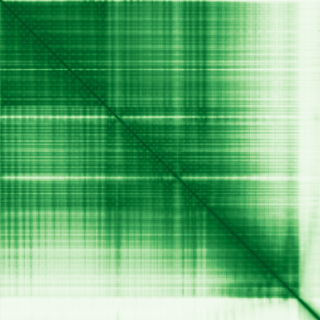
Mean pLDDT
86.5/ 100
Confident
906 residues
Confidence breakdown
- Very high(≥ 90)61%
- Confident(70–90)31%
- Low(50–70)2%
- Very low(< 50)7%
Open interactive 3D viewer
AlphaFold (Jumper et al., 2021) · CC BY 4.0
coat protein complex I subunit beta 2
Annotations refreshed 2 months ago.
Diagnostic Grade (Green)
DDG2P
MONOALLELIC, autosomal or pseudoautosomal, imprinted status unknownIntellectual disability
MONOALLELIC, autosomal or pseudoautosomal, NOT imprintedOsteogenesis imperfecta
MONOALLELIC, autosomal or pseudoautosomal, NOT imprintedSkeletal dysplasia
BOTH monoallelic and biallelic, autosomal or pseudoautosomalFetal anomalies
BOTH monoallelic and biallelic, autosomal or pseudoautosomalSevere microcephaly
BIALLELIC, autosomal or pseudoautosomalosteoporosis, childhood- or juvenile-onset, with developmental delay
microcephaly 19, primary, autosomal recessive
osteoporosis
neurodegenerative disease
hypotonia with lactic acidemia and hyperammonemia
Alzheimer disease
idiopathic juvenile osteoporosis
Osteopenia
multiple sclerosis
lysosomal storage disease
Score is the Open Targets composite evidence score (0-1). Higher = stronger gene-disease association.
Coatomer subunit beta'
The coatomer is a cytosolic protein complex that binds to dilysine motifs and reversibly associates with Golgi non-clathrin-coated vesicles, which further mediate biosynthetic protein transport from the ER, via the Golgi up to the trans Golgi network. Coatomer complex is required for budding from Golgi membranes, and is essential for the retrograde Golgi-to-ER transport of dilysine-tagged proteins. In mammals, the coatomer can only be recruited by membranes associated to ADP-ribosylation factors (ARFs), which are small GTP-binding proteins; the complex also influences the Golgi structural integrity, as well as the processing, activity, and endocytic recycling of LDL receptors
COPB2 · P35606
Mean pLDDT
86.5/ 100
Confident
906 residues
Confidence breakdown
AlphaFold (Jumper et al., 2021) · CC BY 4.0