
AlphaFold predicted structure
COQ2 · Q96H96
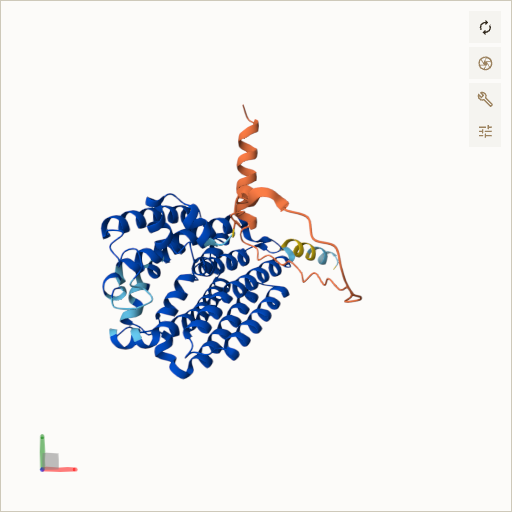

Mean pLDDT
85.3/ 100
Confident
371 residues
Confidence breakdown
- Very high(≥ 90)74%
- Confident(70–90)8%
- Low(50–70)3%
- Very low(< 50)15%
Open interactive 3D viewer
AlphaFold (Jumper et al., 2021) · CC BY 4.0
coenzyme Q2, polyprenyltransferase
Annotations refreshed 3 months ago.
Diagnostic Grade (Green)
DDG2P
BIALLELIC, autosomal or pseudoautosomalEarly onset or syndromic epilepsy
BIALLELIC, autosomal or pseudoautosomalFetal anomalies
BIALLELIC, autosomal or pseudoautosomalInherited white matter disorders
BIALLELIC, autosomal or pseudoautosomalLikely inborn error of metabolism
BIALLELIC, autosomal or pseudoautosomalMitochondrial disorders
BIALLELIC, autosomal or pseudoautosomalPossible mitochondrial disorder - nuclear genes
BIALLELIC, autosomal or pseudoautosomalProteinuric renal disease
BIALLELIC, autosomal or pseudoautosomal+9 more panels — install the extension to see the full list inline on any page.
coenzyme Q10 deficiency, primary, 1
multiple system atrophy
neurodegenerative disease
coenzyme Q10 deficiency
hereditary disease
mitochondrial disease
inborn mitochondrial metabolism disorder
nephrotic syndrome
focal segmental glomerulosclerosis
neonatal encephalopathy
Score is the Open Targets composite evidence score (0-1). Higher = stronger gene-disease association.
4-hydroxybenzoate polyprenyltransferase, mitochondrial
Mediates the second step in the final reaction sequence of coenzyme Q (CoQ) biosynthesis (PubMed:15153069, PubMed:16400613, PubMed:17374725, PubMed:20526342). Catalyzes the prenylation of para-hydroxybenzoate (PHB) with an all-trans polyprenyl donor (such as all-trans-decaprenyl diphosphate) (PubMed:15153069, PubMed:16400613, PubMed:17374725, PubMed:20526342). The length of the polyprenyl side chain varies depending on the species, in humans, the side chain is comprised of 10 isoprenyls (decaprenyl) producing CoQ10 (also known as ubiquinone), whereas rodents predominantly generate CoQ9 (PubMed:15153069, PubMed:16400613). However, this specificity is not complete, human tissues have low amounts of CoQ9 and rodent organs contain some CoQ10 (PubMed:15153069). Plays a central role in the biosynthesis of CoQ10 (PubMed:15153069, PubMed:16400613, PubMed:17374725). CoQ10 is a vital molecule that transports electrons from mitochondrial respiratory chain complexes (PubMed:16400613, PubMed:17374725, PubMed:27493029). CoQs also function as cofactors for uncoupling protein and play a role as regulators of the extracellularly-induced ceramide-dependent apoptotic pathway (PubMed:16400613, PubMed:17374725). Regulates mitochondrial permeability transition pore (mPTP) opening and ROS production (pivotal events in cell death) in a tissue specific manner (By similarity)
COQ2 · Q96H96
Mean pLDDT
85.3/ 100
Confident
371 residues
Confidence breakdown
AlphaFold (Jumper et al., 2021) · CC BY 4.0