AlphaFold predicted structure
CRADD · P78560
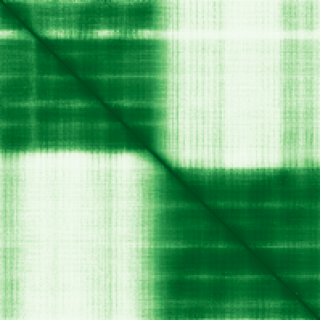
Mean pLDDT
79.4/ 100
Confident
199 residues
Confidence breakdown
- Very high(≥ 90)17%
- Confident(70–90)65%
- Low(50–70)14%
- Very low(< 50)4%
AlphaFold (Jumper et al., 2021) · CC BY 4.0
CARD and death domain containing adaptor protein
Annotations refreshed 9 hours ago.
Diagnostic Grade (Green)
Fetal anomalies
BIALLELIC, autosomal or pseudoautosomalIntellectual disability
BIALLELIC, autosomal or pseudoautosomalMalformations of cortical development
BIALLELIC, autosomal or pseudoautosomalDDG2P
BIALLELIC, autosomal or pseudoautosomalautosomal recessive non-syndromic intellectual disability
intellectual developmental disorder, autosomal recessive 80, with variant lissencephaly
Intellectual disability
osteoarthritis
osteoarthritis, knee
atrial fibrillation
osteoarthritis, hip
syndromic intellectual disability
familial isolated arrhythmogenic right ventricular dysplasia
arthropathy
Score is the Open Targets composite evidence score (0-1). Higher = stronger gene-disease association.
Death domain-containing protein CRADD
Adapter protein that associates with PIDD1 and the caspase CASP2 to form the PIDDosome, a complex that activates CASP2 and triggers apoptosis (PubMed:15073321, PubMed:16652156, PubMed:17159900, PubMed:17289572, PubMed:9044836). Also recruits CASP2 to the TNFR-1 signaling complex through its interaction with RIPK1 and TRADD and may play a role in the tumor necrosis factor-mediated signaling pathway (PubMed:8985253)
CRADD · P78560

Mean pLDDT
79.4/ 100
Confident
199 residues
Confidence breakdown
AlphaFold (Jumper et al., 2021) · CC BY 4.0