AlphaFold predicted structure
CRELD1 · Q96HD1
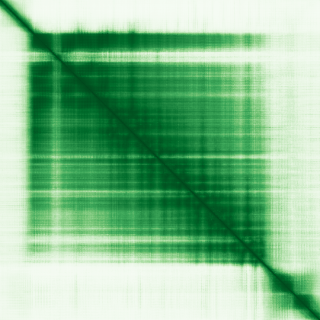
Mean pLDDT
81.9/ 100
Confident
420 residues
Confidence breakdown
- Very high(≥ 90)58%
- Confident(70–90)20%
- Low(50–70)11%
- Very low(< 50)11%
AlphaFold (Jumper et al., 2021) · CC BY 4.0
CRELD disulfide isomerase 1
Annotations refreshed 1 month ago.
Diagnostic Grade (Green)
DDG2P
BIALLELIC, autosomal or pseudoautosomalEarly onset or syndromic epilepsy
BIALLELIC, autosomal or pseudoautosomalIntellectual disability
BIALLELIC, autosomal or pseudoautosomalFamilial non syndromic congenital heart disease
MONOALLELIC, autosomal or pseudoautosomal, NOT imprintedFetal anomalies
BIALLELIC, autosomal or pseudoautosomalLaterality disorders and isomerism
MONOALLELIC, autosomal or pseudoautosomal, imprinted status unknownPaediatric disorders - additional genes
MONOALLELIC, autosomal or pseudoautosomal, imprinted status unknownPrimary ciliary disorders
+3 more panels — install the extension to see the full list inline on any page.
Jeffries-Lakhani neurodevelopmental syndrome
hereditary disease
ventricular septal defect 1
congenital heart defects, multiple types, 4
neurodevelopmental disorder with hypotonia and seizures
congenital heart disease
Tetralogy of Fallot
familial atrioventricular septal defect
familial thoracic aortic aneurysm and aortic dissection
aortic aneurysm, familial thoracic 4
Score is the Open Targets composite evidence score (0-1). Higher = stronger gene-disease association.
Protein disulfide isomerase CRELD1
Protein disulfide isomerase (By similarity). Promotes the localization of acetylcholine receptors (AChRs) to the plasma membrane (By similarity)
CRELD1 · Q96HD1

Mean pLDDT
81.9/ 100
Confident
420 residues
Confidence breakdown
AlphaFold (Jumper et al., 2021) · CC BY 4.0