
AlphaFold predicted structure
CRYM · Q14894
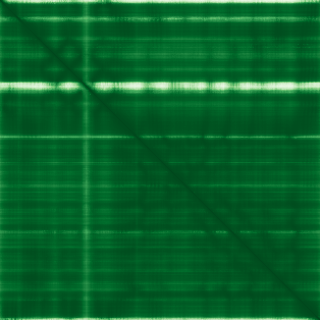
Mean pLDDT
96.1/ 100
Very high
314 residues
Confidence breakdown
- Very high(≥ 90)94%
- Confident(70–90)3%
- Low(50–70)3%
- Very low(< 50)0%
Open interactive 3D viewer
AlphaFold (Jumper et al., 2021) · CC BY 4.0
crystallin mu
Annotations refreshed 2 months ago.
Diagnostic Grade (Green)
Monogenic hearing loss
MONOALLELIC, autosomal or pseudoautosomal, imprinted status unknownautosomal dominant nonsyndromic hearing loss 40
autosomal dominant nonsyndromic hearing loss
liver disorder
diabetes mellitus
posterior cortical atrophy
familial thyroid dyshormonogenesis
hyperthyroxinemia
gastric cancer
thyroid hormone metabolism, abnormal 1
glioblastoma
Score is the Open Targets composite evidence score (0-1). Higher = stronger gene-disease association.
Ketimine reductase mu-crystallin
Catalyzes the NAD(P)H-dependent reduction of imine double bonds of a number of cyclic ketimine substrates, including sulfur-containing cyclic ketimines (PubMed:21332720, PubMed:25931162). Under physiological conditions, it efficiently catalyzes delta(1)-piperideine-2-carboxylate (P2C) and delta(1)-pyrroline-2-carboxylate (Pyr2C) reduction, suggesting a central role in lysine and glutamate metabolism (PubMed:25931162). Additional substrates are delta(2)-thiazoline-2-carboxylate (T2C), 3,4-dehydrothiomorpholine-3-carboxylate (AECK), and (R)-lanthionine ketimine (LK) that is reduced at very low rate compared to other substrates (PubMed:25931162). Also catalyzes the NAD(P)H-dependent reduction of (S)-cystathionine ketimine (CysK) (By similarity)
CRYM · Q14894
Mean pLDDT
96.1/ 100
Very high
314 residues
Confidence breakdown
AlphaFold (Jumper et al., 2021) · CC BY 4.0