Skip to content
GenoLensGenoLens

CTC1

Chr 17p13.1

CST telomere replication complex component 1

Aliases:
FLJ22170, AAF132
MANE:
ENST00000651323.1

Annotations refreshed 1 month ago.

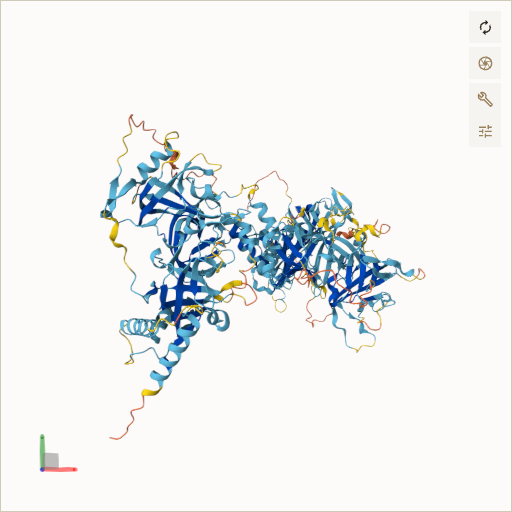
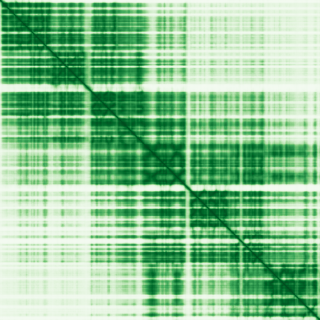
Predicted protein structure

Clinical relevance (Genomics England PanelApp)

Diagnostic Grade (Green)

  • COVID-19 research

    BIALLELIC, autosomal or pseudoautosomal
  • Cytopenia - NOT Fanconi anaemia

    BIALLELIC, autosomal or pseudoautosomal
  • Cytopenias and congenital anaemias

    BIALLELIC, autosomal or pseudoautosomal
  • DDG2P

    BIALLELIC, autosomal or pseudoautosomal
  • Fetal anomalies

    BIALLELIC, autosomal or pseudoautosomal
  • Haematological malignancies cancer susceptibility

    BIALLELIC, autosomal or pseudoautosomal
  • Haematological malignancies for rare disease

    BIALLELIC, autosomal or pseudoautosomal
  • Intracerebral calcification disorders

    BIALLELIC, autosomal or pseudoautosomal

+9 more panels — install the extension to see the full list inline on any page.

Disease associations (Open Targets)

  • Coats plus syndrome

    0.84
  • dyskeratosis congenita

    0.77
  • hereditary disease

    0.51
  • inherited bone marrow failure syndrome

    0.49
  • myelodysplastic syndrome

    0.46
  • acute myeloid leukemia

    0.46
  • Bone marrow hypocellularity

    0.42
  • neurodegenerative disease

    0.41
  • mathematical ability

    0.22
  • retinal disorder

    0.12

Score is the Open Targets composite evidence score (0-1). Higher = stronger gene-disease association.

Protein function (UniProt)

CST complex subunit CTC1

Component of the CST complex proposed to act as a specialized replication factor promoting DNA replication under conditions of replication stress or natural replication barriers such as the telomere duplex. The CST complex binds single-stranded DNA with high affinity in a sequence-independent manner, while isolated subunits bind DNA with low affinity by themselves. Initially the CST complex has been proposed to protect telomeres from DNA degradation (PubMed:19854130). However, the CST complex has been shown to be involved in several aspects of telomere replication. The CST complex inhibits telomerase and is involved in telomere length homeostasis; it is proposed to bind to newly telomerase-synthesized 3' overhangs and to terminate telomerase action implicating the association with the ACD:POT1 complex thus interfering with its telomerase stimulation activity. The CST complex is also proposed to be involved in fill-in synthesis of the telomeric C-strand probably implicating recruitment and activation of DNA polymerase alpha (PubMed:22763445). The CST complex facilitates recovery from many forms of exogenous DNA damage; seems to be involved in the re-initiation of DNA replication at repaired forks and/or dormant origins (PubMed:25483097). Involved in telomere maintenance (PubMed:19854131, PubMed:22863775). Involved in genome stability (PubMed:22863775). May be in involved in telomeric C-strand fill-in during late S/G2 phase (By similarity)

Data sources: HGNC (CC BY 4.0), AlphaFold (CC BY 4.0, Jumper et al. Nature 2021), Genomics England PanelApp (CC BY 4.0), ClinGen, Open Targets (CC0), UniProt.

Not for sole clinical decision-making. Always verify against primary sources.