Skip to content
GenoLensGenoLens

CTNNA1

Chr 5q31.2

catenin alpha 1

Aliases:
CAP102
MANE:
ENST00000302763.12

Annotations refreshed 10 hours ago.

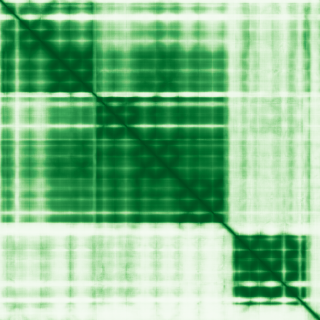
Predicted protein structure

Clinical relevance (Genomics England PanelApp)

Diagnostic Grade (Green)

  • Hereditary diffuse gastric cancer

    MONOALLELIC, autosomal or pseudoautosomal, imprinted status unknown
  • Retinal disorders

    MONOALLELIC, autosomal or pseudoautosomal, imprinted status unknown
  • Rare syndromic craniosynostosis or isolated multisuture synostosis

    MONOALLELIC, autosomal or pseudoautosomal, imprinted status unknown

Disease associations (Open Targets)

  • Butterfly-shaped pigment dystrophy

    0.75
  • Inherited cancer-predisposing syndrome

    0.56
  • hereditary neoplastic syndrome

    0.56
  • hereditary diffuse gastric adenocarcinoma

    0.55
  • colorectal cancer

    0.51
  • Familial exudative vitreoretinopathy

    0.39
  • patterned macular dystrophy 1

    0.39
  • exudative vitreoretinopathy

    0.38
  • hereditary mixed polyposis syndrome

    0.37
  • Retinal dystrophy

    0.35

Score is the Open Targets composite evidence score (0-1). Higher = stronger gene-disease association.

Protein function (UniProt)

Catenin alpha-1

Associates with the cytoplasmic domain of a variety of cadherins. The association of catenins to cadherins produces a complex which is linked to the actin filament network, and which seems to be of primary importance for cadherins cell-adhesion properties (PubMed:40983751). Can associate with both E- and N-cadherins. Originally believed to be a stable component of E-cadherin/catenin adhesion complexes and to mediate the linkage of cadherins to the actin cytoskeleton at adherens junctions. In contrast, cortical actin was found to be much more dynamic than E-cadherin/catenin complexes and CTNNA1 was shown not to bind to F-actin when assembled in the complex suggesting a different linkage between actin and adherens junctions components. The homodimeric form may regulate actin filament assembly and inhibit actin branching by competing with the Arp2/3 complex for binding to actin filaments. Involved in the regulation of WWTR1/TAZ, YAP1 and TGFB1-dependent SMAD2 and SMAD3 nuclear accumulation (By similarity). May play a crucial role in cell differentiation

Data sources: HGNC (CC BY 4.0), AlphaFold (CC BY 4.0, Jumper et al. Nature 2021), Genomics England PanelApp (CC BY 4.0), ClinGen, Open Targets (CC0), UniProt.

Not for sole clinical decision-making. Always verify against primary sources.