
AlphaFold predicted structure
CYC1 · P08574
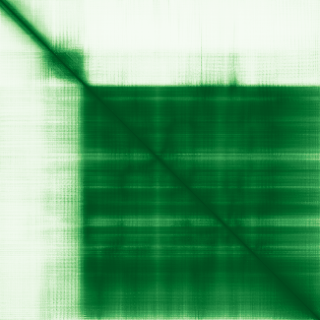
Mean pLDDT
84.9/ 100
Confident
325 residues
Confidence breakdown
- Very high(≥ 90)72%
- Confident(70–90)9%
- Low(50–70)4%
- Very low(< 50)15%
Open interactive 3D viewer
AlphaFold (Jumper et al., 2021) · CC BY 4.0
cytochrome c1
Annotations refreshed 2 months ago.
Diagnostic Grade (Green)
DDG2P
BIALLELIC, autosomal or pseudoautosomalIntellectual disability
BIALLELIC, autosomal or pseudoautosomalLikely inborn error of metabolism
BIALLELIC, autosomal or pseudoautosomalMitochondrial disorder with complex III deficiency
BIALLELIC, autosomal or pseudoautosomalMitochondrial disorders
BIALLELIC, autosomal or pseudoautosomalPossible mitochondrial disorder - nuclear genes
BIALLELIC, autosomal or pseudoautosomalUndiagnosed metabolic disorders
BIALLELIC, autosomal or pseudoautosomalChildhood onset dystonia, chorea or related movement disorder
+2 more panels — install the extension to see the full list inline on any page.
Isolated CoQ-cytochrome C reductase deficiency
mitochondrial complex III deficiency
neurodegenerative disease
autoimmune disorder of central nervous system
inborn mitochondrial metabolism disorder
mitochondrial disease
nasopharyngeal carcinoma
ductal breast carcinoma in situ
breast cancer
breast carcinoma
Score is the Open Targets composite evidence score (0-1). Higher = stronger gene-disease association.
Cytochrome c1, heme protein, mitochondrial
Component of the ubiquinol-cytochrome c oxidoreductase, a multisubunit transmembrane complex that is part of the mitochondrial electron transport chain which drives oxidative phosphorylation. The respiratory chain contains 3 multisubunit complexes succinate dehydrogenase (complex II, CII), ubiquinol-cytochrome c oxidoreductase (cytochrome b-c1 complex, complex III, CIII) and cytochrome c oxidase (complex IV, CIV), that cooperate to transfer electrons derived from NADH and succinate to molecular oxygen, creating an electrochemical gradient over the inner membrane that drives transmembrane transport and the ATP synthase. The cytochrome b-c1 complex catalyzes electron transfer from ubiquinol to cytochrome c, linking this redox reaction to translocation of protons across the mitochondrial inner membrane, with protons being carried across the membrane as hydrogens on the quinol. In the process called Q cycle, 2 protons are consumed from the matrix, 4 protons are released into the intermembrane space and 2 electrons are passed to cytochrome c. Cytochrome c1 is a catalytic core subunit containing a c-type heme. It transfers electrons from the [2Fe-2S] iron-sulfur cluster of the Rieske protein to cytochrome c
CYC1 · P08574
Mean pLDDT
84.9/ 100
Confident
325 residues
Confidence breakdown
AlphaFold (Jumper et al., 2021) · CC BY 4.0