
AlphaFold predicted structure
CYLD · Q9NQC7
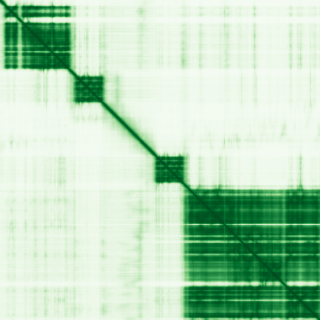
Mean pLDDT
74.4/ 100
Confident
956 residues
Confidence breakdown
- Very high(≥ 90)42%
- Confident(70–90)29%
- Low(50–70)6%
- Very low(< 50)24%
Open interactive 3D viewer
AlphaFold (Jumper et al., 2021) · CC BY 4.0
CYLD lysine 63 deubiquitinase
Annotations refreshed 2 months ago.
Diagnostic Grade (Green)
Multiple monogenic benign skin tumours
MONOALLELIC, autosomal or pseudoautosomal, NOT imprintedBrooke-Spiegler syndrome
familial cylindromatosis
frontotemporal dementia and/or amyotrophic lateral sclerosis
familial multiple trichoepithelioma
trichoepithelioma, multiple familial, 1
plasma cell myeloma
benign neoplasm of skin
adnexal spiradenoma/cylindroma of a sweat gland
benign spiradenoma
skin basal cell carcinoma
Score is the Open Targets composite evidence score (0-1). Higher = stronger gene-disease association.
Ubiquitin carboxyl-terminal hydrolase CYLD
Deubiquitinase that specifically cleaves 'Lys-63'- and linear 'Met-1'-linked polyubiquitin chains and is involved in NF-kappa-B activation and TNF-induced necroptosis (PubMed:18313383, PubMed:18636086, PubMed:26670046, PubMed:26997266, PubMed:27458237, PubMed:27591049, PubMed:27746020, PubMed:29291351, PubMed:32185393). Negatively regulates NF-kappa-B activation by deubiquitinating upstream signaling factors (PubMed:12917689, PubMed:12917691, PubMed:32185393). Contributes to the regulation of cell survival, proliferation and differentiation via its effects on NF-kappa-B activation (PubMed:12917690). Negative regulator of Wnt signaling (PubMed:20227366). Inhibits HDAC6 and thereby promotes acetylation of alpha-tubulin and stabilization of microtubules (PubMed:19893491). Plays a role in the regulation of microtubule dynamics, and thereby contributes to the regulation of cell proliferation, cell polarization, cell migration, and angiogenesis (PubMed:18222923, PubMed:20194890). Required for normal cell cycle progress and normal cytokinesis (PubMed:17495026, PubMed:19893491). Inhibits nuclear translocation of NF-kappa-B (PubMed:18636086). Plays a role in the regulation of inflammation and the innate immune response, via its effects on NF-kappa-B activation (PubMed:18636086). Dispensable for the maturation of intrathymic natural killer cells, but required for the continued survival of immature natural killer cells (By similarity). Negatively regulates TNFRSF11A signaling and osteoclastogenesis (By similarity). Involved in the regulation of ciliogenesis, allowing ciliary basal bodies to migrate and dock to the plasma membrane; this process does not depend on NF-kappa-B activation (By similarity). Ability to remove linear ('Met-1'-linked) polyubiquitin chains regulates innate immunity and TNF-induced necroptosis: recruited to the LUBAC complex via interaction with SPATA2 and restricts linear polyubiquitin formation on target proteins (PubMed:26670046, PubMed:26997266, PubMed:27458237, PubMed:27591049). Regulates innate immunity by restricting linear polyubiquitin formation on RIPK2 in response to NOD2 stimulation (PubMed:26997266). Involved in TNF-induced necroptosis by removing linear ('Met-1'-linked) polyubiquitin chains from RIPK1, thereby regulating the kinase activity of RIPK1 (By similarity). Negatively regulates intestinal inflammation by removing 'Lys-63' linked polyubiquitin chain of NLRP6, thereby reducing the interaction between NLRP6 and PYCARD/ASC and formation of the NLRP6 inflammasome (By similarity). Does not catalyze deubiquitination of heterotypic 'Lys-63'-/'Lys-48'-linked branched ubiquitin chains (PubMed:27746020). Removes 'Lys-63' linked polyubiquitin chain of MAP3K7, which inhibits phosphorylation and blocks downstream activation of the JNK-p38 kinase cascades (PubMed:29291351). Also removes 'Lys-63'-linked polyubiquitin chains of MAP3K1 and MA3P3K3, which inhibit their interaction with MAP2K1 and MAP2K2 (PubMed:34497368)
Curated MONDO disease pages that list CYLD among their top associated genes.
CYLD · Q9NQC7
Mean pLDDT
74.4/ 100
Confident
956 residues
Confidence breakdown
AlphaFold (Jumper et al., 2021) · CC BY 4.0