
AlphaFold predicted structure
DACH2 · Q96NX9
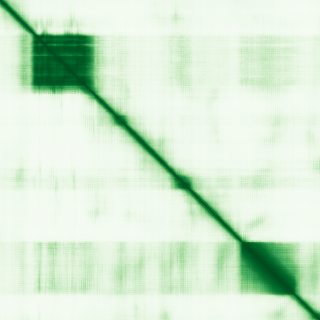
Mean pLDDT
61.4/ 100
Low
599 residues
Confidence breakdown
- Very high(≥ 90)30%
- Confident(70–90)7%
- Low(50–70)11%
- Very low(< 50)52%
Open interactive 3D viewer
AlphaFold (Jumper et al., 2021) · CC BY 4.0
dachshund family transcription factor 2
Annotations refreshed 3 months ago.
Moderate Evidence (Amber)
Primary ovarian insufficiency
X-LINKED: hemizygous mutation in males, monoallelic mutations in females may cause disease (may be less severe, later onset than males)COVID-19
severe acute respiratory syndrome
prostate cancer
premature menopause
Premature ovarian insufficiency
Meckel syndrome
Matthew-Wood syndrome
hereditary spherocytosis
Fraser syndrome
sickle cell disease
Score is the Open Targets composite evidence score (0-1). Higher = stronger gene-disease association.
Dachshund homolog 2
Transcription factor that is involved in regulation of organogenesis. Seems to be a regulator for SIX1 and SIX6. Seems to act as a corepressor of SIX6 in regulating proliferation by directly repressing cyclin-dependent kinase inhibitors, including the p27Kip1 promoter. Is recruited with SIX6 to the p27Kip1 promoter in embryonal retina. SIX6 corepression also seems to involve NCOR1, TBL1, HDAC1 and HDAC3. May be involved together with PAX3, SIX1, and EYA2 in regulation of myogenesis. In the developing somite, expression of DACH2 and PAX3 is regulated by the overlying ectoderm, and DACH2 and PAX3 positively regulate each other's expression (By similarity). Probably binds to DNA via its DACHbox-N domain
DACH2 · Q96NX9
Mean pLDDT
61.4/ 100
Low
599 residues
Confidence breakdown
AlphaFold (Jumper et al., 2021) · CC BY 4.0