
AlphaFold predicted structure
DAG1 · Q14118
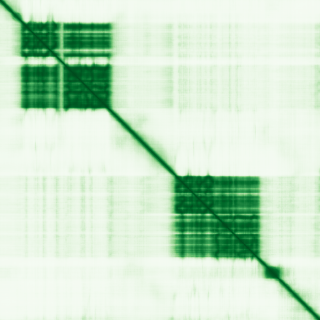
Mean pLDDT
68.2/ 100
Low
895 residues
Confidence breakdown
- Very high(≥ 90)32%
- Confident(70–90)21%
- Low(50–70)10%
- Very low(< 50)38%
Open interactive 3D viewer
AlphaFold (Jumper et al., 2021) · CC BY 4.0
dystroglycan 1
Annotations refreshed 2 months ago.
Diagnostic Grade (Green)
Arthrogryposis
BIALLELIC, autosomal or pseudoautosomalCongenital muscular dystrophy
BIALLELIC, autosomal or pseudoautosomalCOVID-19 research
UnknownDDG2P
BIALLELIC, autosomal or pseudoautosomalFetal anomalies
BIALLELIC, autosomal or pseudoautosomalHydrocephalus
BIALLELIC, autosomal or pseudoautosomalIntellectual disability
BIALLELIC, autosomal or pseudoautosomalLimb girdle muscular dystrophies, myofibrillar myopathies and distal myopathies
BIALLELIC, autosomal or pseudoautosomal+6 more panels — install the extension to see the full list inline on any page.
autosomal recessive limb-girdle muscular dystrophy type 2P
muscular dystrophy-dystroglycanopathy (congenital with brain and eye anomalies), type A9
congenital muscular dystrophy
congenital muscular dystrophy due to LMNA mutation
limb-girdle muscular dystrophy
muscular dystrophy-dystroglycanopathy, type A
autosomal recessive limb-girdle muscular dystrophy type 2U
neuromuscular disease caused by qualitative or quantitative defects of alpha-dystroglycan
isolated asymptomatic elevation of creatine phosphokinase
muscle-eye-brain disease with bilateral multicystic leucodystrophy
Score is the Open Targets composite evidence score (0-1). Higher = stronger gene-disease association.
Dystroglycan 1
The dystroglycan complex is involved in a number of signaling events and processes including laminin deposition and extracellular matrix assembly, acetylcholine receptor clustering, sarcolemmal stability, cell survival, peripheral nerve myelination, nodal structure, cell migration, epithelial polarization, and epithelium branching morphogenesis (By similarity). Required for the formation of photoreceptor ribbon synapses, and long-term maintenance of inhibitory synapses in cerebellar Purkinje cells (By similarity). Also involved in the positive regulation of cartilage formation through agrin (AGRN) binding and up-regulation of SOX9, a transcription factor that plays a key role in chondrocytes differentiation (PubMed:26290588)
DAG1 · Q14118
Mean pLDDT
68.2/ 100
Low
895 residues
Confidence breakdown
AlphaFold (Jumper et al., 2021) · CC BY 4.0