
AlphaFold predicted structure
DBR1 · Q9UK59
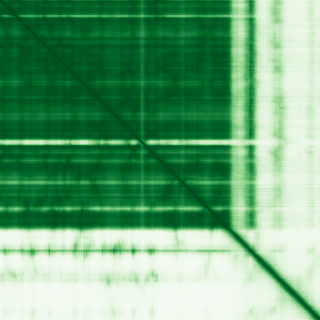
Mean pLDDT
78.3/ 100
Confident
544 residues
Confidence breakdown
- Very high(≥ 90)66%
- Confident(70–90)5%
- Low(50–70)2%
- Very low(< 50)27%
Open interactive 3D viewer
AlphaFold (Jumper et al., 2021) · CC BY 4.0
debranching RNA lariats 1
Annotations refreshed 2 months ago.
Diagnostic Grade (Green)
COVID-19 research
BIALLELIC, autosomal or pseudoautosomalPrimary immunodeficiency or monogenic inflammatory bowel disease
BIALLELIC, autosomal or pseudoautosomalIchthyosis and erythrokeratoderma
BIALLELIC, autosomal or pseudoautosomalneurodegenerative disease
xerosis and growth failure with immune and pulmonary dysfunction syndrome
hereditary disease
ichthyosis
retinitis pigmentosa
early-onset non-syndromic cataract
Posterior polar cataract
early-onset zonular cataract
posterior polymorphous corneal dystrophy
Partial congenital cataract
Score is the Open Targets composite evidence score (0-1). Higher = stronger gene-disease association.
Lariat debranching enzyme
Cleaves the 2'-5' phosphodiester linkage at the branch point of excised lariat intron RNA and converts them into linear molecules that can be subsequently degraded, thereby facilitating ribonucleotide turnover (PubMed:10982890, PubMed:16232320, PubMed:2435736). Linked to its role in pre-mRNA processing mechanism, may also participate in retrovirus replication via an RNA lariat intermediate in cDNA synthesis and have an antiviral cell-intrinsic defense function in the brainstem (PubMed:16232320, PubMed:29474921)
DBR1 · Q9UK59
Mean pLDDT
78.3/ 100
Confident
544 residues
Confidence breakdown
AlphaFold (Jumper et al., 2021) · CC BY 4.0