
AlphaFold predicted structure
DCLRE1C · Q96SD1
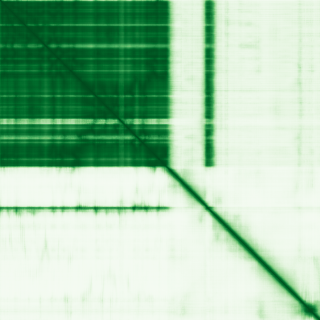
Mean pLDDT
69.4/ 100
Low
692 residues
Confidence breakdown
- Very high(≥ 90)46%
- Confident(70–90)9%
- Low(50–70)5%
- Very low(< 50)40%
Open interactive 3D viewer
AlphaFold (Jumper et al., 2021) · CC BY 4.0
DNA cross-link repair 1C
Annotations refreshed 2 months ago.
Diagnostic Grade (Green)
COVID-19 research
BIALLELIC, autosomal or pseudoautosomalGastrointestinal epithelial barrier disorders
BIALLELIC, autosomal or pseudoautosomalInfantile enterocolitis & monogenic inflammatory bowel disease
BIALLELIC, autosomal or pseudoautosomalPrimary immunodeficiency or monogenic inflammatory bowel disease
BIALLELIC, autosomal or pseudoautosomalRare genetic inflammatory skin disorders
BIALLELIC, autosomal or pseudoautosomalsevere combined immunodeficiency due to DCLRE1C deficiency
Omenn syndrome
severe combined immunodeficiency
histiocytic medullary reticulosis
T-B+ severe combined immunodeficiency
T-B- severe combined immunodeficiency
combined immunodeficiency
nervous system benign neoplasm
Ehlers-Danlos syndrome, musculocontractural type
Ehlers-Danlos syndrome, kyphoscoliotic type 1
Score is the Open Targets composite evidence score (0-1). Higher = stronger gene-disease association.
Protein artemis
Nuclease involved in DNA non-homologous end joining (NHEJ); required for double-strand break repair and V(D)J recombination (PubMed:11336668, PubMed:11955432, PubMed:12055248, PubMed:14744996, PubMed:15071507, PubMed:15574326, PubMed:15936993). Required for V(D)J recombination, the process by which exons encoding the antigen-binding domains of immunoglobulins and T-cell receptor proteins are assembled from individual V, (D), and J gene segments (PubMed:11336668, PubMed:11955432, PubMed:14744996). V(D)J recombination is initiated by the lymphoid specific RAG endonuclease complex, which generates site specific DNA double strand breaks (DSBs) (PubMed:11336668, PubMed:11955432, PubMed:14744996). These DSBs present two types of DNA end structures: hairpin sealed coding ends and phosphorylated blunt signal ends (PubMed:11336668, PubMed:11955432, PubMed:14744996). These ends are independently repaired by the non homologous end joining (NHEJ) pathway to form coding and signal joints respectively (PubMed:11336668, PubMed:11955432, PubMed:14744996). This protein exhibits single-strand specific 5'-3' exonuclease activity in isolation and acquires endonucleolytic activity on 5' and 3' hairpins and overhangs when in a complex with PRKDC (PubMed:11955432, PubMed:15071507, PubMed:15574326, PubMed:15936993). The latter activity is required specifically for the resolution of closed hairpins prior to the formation of the coding joint (PubMed:11955432). Also required for the repair of complex DSBs induced by ionizing radiation, which require substantial end-processing prior to religation by NHEJ (PubMed:15456891, PubMed:15468306, PubMed:15574327, PubMed:15811628)
DCLRE1C · Q96SD1
Mean pLDDT
69.4/ 100
Low
692 residues
Confidence breakdown
AlphaFold (Jumper et al., 2021) · CC BY 4.0