
AlphaFold predicted structure
DDB2 · Q92466
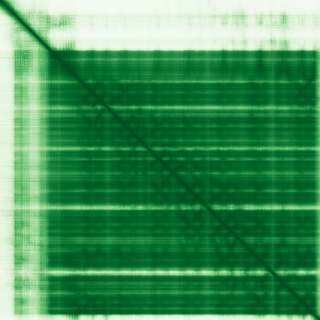
Mean pLDDT
83.6/ 100
Confident
427 residues
Confidence breakdown
- Very high(≥ 90)70%
- Confident(70–90)13%
- Low(50–70)1%
- Very low(< 50)16%
Open interactive 3D viewer
AlphaFold (Jumper et al., 2021) · CC BY 4.0
damage specific DNA binding protein 2
Annotations refreshed 2 months ago.
Diagnostic Grade (Green)
Adult solid tumours cancer susceptibility
BIALLELIC, autosomal or pseudoautosomalChildhood solid tumours
BIALLELIC, autosomal or pseudoautosomalChildhood solid tumours cancer susceptibility
BIALLELIC, autosomal or pseudoautosomalDDG2P
BIALLELIC, autosomal or pseudoautosomalWhite matter disorders and cerebral calcification - narrow panel
BIALLELIC, autosomal or pseudoautosomalXeroderma pigmentosum, Trichothiodystrophy or Cockayne syndrome
BIALLELIC, autosomal or pseudoautosomalAnophthalmia or microphthalmia
Fetal anomalies
BIALLELIC, autosomal or pseudoautosomal+3 more panels — install the extension to see the full list inline on any page.
xeroderma pigmentosum group E
Xeroderma pigmentosum complementation group E
xeroderma pigmentosum
prostate carcinoma
skin basal cell carcinoma
hemangioblastoma
ovarian endometrioid adenocarcinoma with squamous differentiation
acute myeloid leukemia
cardiomyopathy
mood disorder
Score is the Open Targets composite evidence score (0-1). Higher = stronger gene-disease association.
DNA damage-binding protein 2
Protein, which is both involved in DNA repair and protein ubiquitination, as part of the UV-DDB complex and DCX (DDB1-CUL4-X-box) complexes, respectively (PubMed:10882109, PubMed:11278856, PubMed:11705987, PubMed:12732143, PubMed:15882621, PubMed:16473935, PubMed:18593899, PubMed:32789493, PubMed:9892649). Core component of the UV-DDB complex (UV-damaged DNA-binding protein complex), a complex that recognizes UV-induced DNA damage and recruit proteins of the nucleotide excision repair pathway (the NER pathway) to initiate DNA repair (PubMed:10882109, PubMed:11278856, PubMed:11705987, PubMed:12944386, PubMed:14751237, PubMed:16260596, PubMed:32789493). The UV-DDB complex preferentially binds to cyclobutane pyrimidine dimers (CPD), 6-4 photoproducts (6-4 PP), apurinic sites and short mismatches (PubMed:10882109, PubMed:11278856, PubMed:11705987, PubMed:12944386, PubMed:16260596). Also functions as the substrate recognition module for the DCX (DDB2-CUL4-X-box) E3 ubiquitin-protein ligase complex DDB2-CUL4-ROC1 (also known as CUL4-DDB-ROC1 and CUL4-DDB-RBX1) (PubMed:12732143, PubMed:15882621, PubMed:16473935, PubMed:18593899, PubMed:26572825). The DDB2-CUL4-ROC1 complex may ubiquitinate histone H2A, histone H3 and histone H4 at sites of UV-induced DNA damage (PubMed:16473935, PubMed:16678110). The ubiquitination of histones may facilitate their removal from the nucleosome and promote subsequent DNA repair (PubMed:16473935, PubMed:16678110). The DDB2-CUL4-ROC1 complex also ubiquitinates XPC, which may enhance DNA-binding by XPC and promote NER (PubMed:15882621). The DDB2-CUL4-ROC1 complex also ubiquitinates KAT7/HBO1 in response to DNA damage, leading to its degradation: recognizes KAT7/HBO1 following phosphorylation by ATR (PubMed:26572825)
DDB2 · Q92466
Mean pLDDT
83.6/ 100
Confident
427 residues
Confidence breakdown
AlphaFold (Jumper et al., 2021) · CC BY 4.0