Skip to content
GenoLensGenoLens

DDHD2

Chr 8p11.23

DDHD domain containing 2

Aliases:
KIAA0725, SPG54, p125B, iPLA1gamma, iPLA1γ
MANE:
ENST00000397166.7

Annotations refreshed 1 month ago.

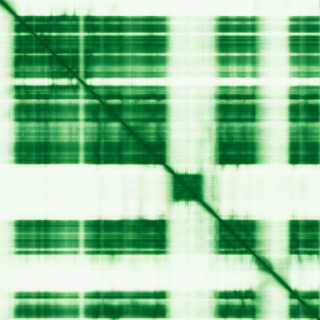
Predicted protein structure

Clinical relevance (Genomics England PanelApp)

Diagnostic Grade (Green)

  • Adult onset hereditary spastic paraplegia

    BIALLELIC, autosomal or pseudoautosomal
  • Ataxia and cerebellar anomalies - narrow panel

    BIALLELIC, autosomal or pseudoautosomal
  • Childhood onset hereditary spastic paraplegia

    BIALLELIC, autosomal or pseudoautosomal
  • DDG2P

    BIALLELIC, autosomal or pseudoautosomal
  • Hereditary ataxia

    BIALLELIC, autosomal or pseudoautosomal
  • Hereditary ataxia with onset in adulthood

    BIALLELIC, autosomal or pseudoautosomal
  • Hereditary spastic paraplegia

    BIALLELIC, autosomal or pseudoautosomal
  • Intellectual disability

    BIALLELIC, autosomal or pseudoautosomal

+3 more panels — install the extension to see the full list inline on any page.

Disease associations (Open Targets)

  • Autosomal recessive spastic paraplegia type 54

    0.80
  • hereditary spastic paraplegia 54

    0.75
  • complex hereditary spastic paraplegia

    0.55
  • hereditary disease

    0.47
  • hereditary spastic paraplegia

    0.47
  • hypothyroidism

    0.41
  • Senior-Loken syndrome 6

    0.37
  • Obesity

    0.34
  • Global developmental delay

    0.34
  • generalized epilepsy

    0.34

Score is the Open Targets composite evidence score (0-1). Higher = stronger gene-disease association.

Protein function (UniProt)

Triacylglycerol hydrolase DDHD2

Diacylglycerol (DAG) and triacylglycerol (TAG) lipase required for proper lipid homeostasis in the central nervous system (PubMed:29278326, PubMed:37832604). It cooperates with PNPLA2/ATGL in neuronal TAG catabolism and hydrolyzes sn-1,3 DAG downstream of PNPLA2/ATGL (By similarity). In vitro, it also acts as a phospholipase that hydrolyzes preferentially phosphatidic acids, including 1,2-dioleoyl-sn-phosphatidic acid, phosphatidylcholine and phosphatidylethanolamine. Specifically binds to phosphatidylinositol 3-phosphate (PI(3)P), phosphatidylinositol 4-phosphate (PI(4)P), phosphatidylinositol 5-phosphate (PI(5)P) and possibly phosphatidylinositol 4,5-bisphosphate (PI(4,5)P2). May be involved in the maintenance of the endoplasmic reticulum and/or Golgi structures. May regulate the transport between Golgi apparatus and plasma membrane

Data sources: HGNC (CC BY 4.0), AlphaFold (CC BY 4.0, Jumper et al. Nature 2021), Genomics England PanelApp (CC BY 4.0), ClinGen, Open Targets (CC0), UniProt.

Not for sole clinical decision-making. Always verify against primary sources.