
AlphaFold predicted structure
DEAF1 · O75398
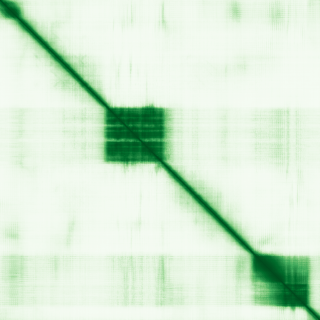
Mean pLDDT
60.4/ 100
Low
565 residues
Confidence breakdown
- Very high(≥ 90)25%
- Confident(70–90)10%
- Low(50–70)12%
- Very low(< 50)53%
Open interactive 3D viewer
AlphaFold (Jumper et al., 2021) · CC BY 4.0
DEAF1 transcription factor
Annotations refreshed 2 months ago.
Diagnostic Grade (Green)
DDG2P
BOTH monoallelic and biallelic, autosomal or pseudoautosomalEarly onset or syndromic epilepsy
BOTH monoallelic and biallelic, autosomal or pseudoautosomalIntellectual disability
BOTH monoallelic and biallelic, autosomal or pseudoautosomalFetal anomalies
BIALLELIC, autosomal or pseudoautosomalintellectual disability, autosomal dominant 24
intellectual disability-epilepsy-extrapyramidal syndrome
intellectual developmental disorder with paroxysmal dyskinesia or seizures
autosomal dominant non-syndromic intellectual disability
hereditary disease
Neurodevelopmental delay
autism spectrum disorder
autism
developmental disability
Intellectual disability
Score is the Open Targets composite evidence score (0-1). Higher = stronger gene-disease association.
Deformed epidermal autoregulatory factor 1 homolog
Transcription factor that binds to sequence with multiple copies of 5'-TTC[CG]G-3' present in its own promoter and that of the HNRPA2B1 gene. Down-regulates transcription of these genes. Binds to the retinoic acid response element (RARE) 5'-AGGGTTCACCGAAAGTTCA-3'. Activates the proenkephalin gene independently of promoter binding, probably through protein-protein interaction. When secreted, behaves as an inhibitor of cell proliferation, by arresting cells in the G0 or G1 phase. Required for neural tube closure and skeletal patterning. Regulates epithelial cell proliferation and side-branching in the mammary gland. Controls the expression of peripheral tissue antigens in pancreatic lymph nodes. Isoform 1 displays greater transcriptional activity than isoform 4. Isoform 4 may inhibit transcriptional activity of isoform 1 by interacting with isoform 1 and retaining it in the cytoplasm. Transcriptional activator of EIF4G3
DEAF1 · O75398
Mean pLDDT
60.4/ 100
Low
565 residues
Confidence breakdown
AlphaFold (Jumper et al., 2021) · CC BY 4.0