
AlphaFold predicted structure
DES · P17661
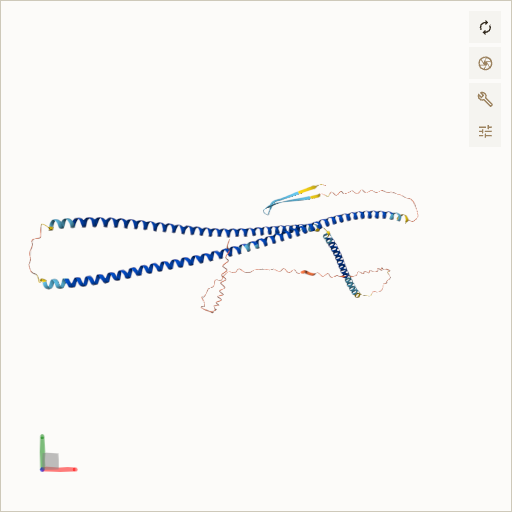
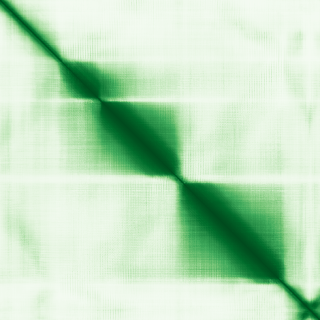
Mean pLDDT
76.6/ 100
Confident
470 residues
Confidence breakdown
- Very high(≥ 90)54%
- Confident(70–90)14%
- Low(50–70)6%
- Very low(< 50)26%
Open interactive 3D viewer
AlphaFold (Jumper et al., 2021) · CC BY 4.0
desmin
Annotations refreshed 2 months ago.
Diagnostic Grade (Green)
Arrhythmogenic right ventricular cardiomyopathy
BOTH monoallelic and biallelic, autosomal or pseudoautosomalDilated and arrhythmogenic cardiomyopathy
BOTH monoallelic and biallelic, autosomal or pseudoautosomalDilated Cardiomyopathy and conduction defects
MONOALLELIC, autosomal or pseudoautosomal, imprinted status unknownDistal myopathies
BOTH monoallelic and biallelic, autosomal or pseudoautosomalGastrointestinal neuromuscular disorders
BOTH monoallelic and biallelic, autosomal or pseudoautosomalLimb girdle muscular dystrophies, myofibrillar myopathies and distal myopathies
BOTH monoallelic and biallelic, autosomal or pseudoautosomalPaediatric or syndromic cardiomyopathy
BOTH monoallelic and biallelic, autosomal or pseudoautosomalProgressive cardiac conduction disease
BOTH monoallelic and biallelic, autosomal or pseudoautosomal+7 more panels — install the extension to see the full list inline on any page.
myofibrillar myopathy 1
Desminopathy
dilated cardiomyopathy 1I
neurogenic scapuloperoneal syndrome, Kaeser type
Autosomal recessive limb-girdle muscular dystrophy due to desmin deficiency
familial isolated dilated cardiomyopathy
Scapuloperoneal amyotrophy
myofibrillar myopathy
dilated cardiomyopathy
cardiomyopathy
Score is the Open Targets composite evidence score (0-1). Higher = stronger gene-disease association.
Desmin
Muscle-specific type III intermediate filament essential for proper muscular structure and function. Plays a crucial role in maintaining the structure of sarcomeres, inter-connecting the Z-disks and forming the myofibrils, linking them not only to the sarcolemmal cytoskeleton, but also to the nucleus and mitochondria, thus providing strength for the muscle fiber during activity (PubMed:25358400). In adult striated muscle they form a fibrous network connecting myofibrils to each other and to the plasma membrane from the periphery of the Z-line structures (PubMed:24200904, PubMed:25394388, PubMed:26724190). May act as a sarcomeric microtubule-anchoring protein: specifically associates with detyrosinated tubulin-alpha chains, leading to buckled microtubules and mechanical resistance to contraction. Required for nuclear membrane integrity, via anchoring at the cell tip and nuclear envelope, resulting in maintenance of microtubule-derived intracellular mechanical forces (By similarity). Contributes to the transcriptional regulation of the NKX2-5 gene in cardiac progenitor cells during a short period of cardiomyogenesis and in cardiac side population stem cells in the adult. Plays a role in maintaining an optimal conformation of nebulette (NEB) on heart muscle sarcomeres to bind and recruit cardiac alpha-actin (By similarity)
Curated MONDO disease pages that list DES among their top associated genes.
DES · P17661
Mean pLDDT
76.6/ 100
Confident
470 residues
Confidence breakdown
AlphaFold (Jumper et al., 2021) · CC BY 4.0