
AlphaFold predicted structure
DHRSX · Q8N5I4
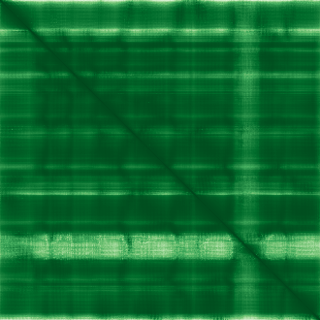
Mean pLDDT
94.9/ 100
Very high
330 residues
Confidence breakdown
- Very high(≥ 90)86%
- Confident(70–90)14%
- Low(50–70)1%
- Very low(< 50)0%
Open interactive 3D viewer
AlphaFold (Jumper et al., 2021) · CC BY 4.0
dehydrogenase/reductase X-linked
Annotations refreshed 3 months ago.
Diagnostic Grade (Green)
Congenital disorders of glycosylation
BIALLELIC, autosomal or pseudoautosomalFetal anomalies
BIALLELIC, autosomal or pseudoautosomalIntellectual disability
BIALLELIC, autosomal or pseudoautosomalLikely inborn error of metabolism
BIALLELIC, autosomal or pseudoautosomalEarly onset or syndromic epilepsy
BIALLELIC, autosomal or pseudoautosomalMonogenic hearing loss
BIALLELIC, autosomal or pseudoautosomalcongenital disorder of glycosylation, type 1DD
neurodegenerative disease
hepatocellular carcinoma
Abnormality of prenatal development or birth
leukemia
acute lymphoblastic leukemia
Timothy syndrome
precursor B-cell acute lymphoblastic leukemia
neoplasm
early-onset autosomal dominant Alzheimer disease
Score is the Open Targets composite evidence score (0-1). Higher = stronger gene-disease association.
Polyprenol dehydrogenase
Oxidoreductase that plays a key role in early steps of protein N-linked glycosylation by mediating two non-consecutive steps in dolichol biosynthesis (PubMed:38821050). Acts both as a NAD(+)-dependent dehydrogenase and as a NADPH-dependent reductase during the conversion of polyprenol into dolichol (PubMed:38821050). First catalyzes the NAD(+)-dependent dehydrogenation of polyprenol into polyprenal; polyprenal is then reduced into dolichal by SRD5A3 (PubMed:38821050). It then catalyzes the NADPH-dependent reduction of dolichal into dolichol (PubMed:38821050). May also acts as a positive regulator of starvation-induced autophagy (PubMed:25076851)
DHRSX · Q8N5I4
Mean pLDDT
94.9/ 100
Very high
330 residues
Confidence breakdown
AlphaFold (Jumper et al., 2021) · CC BY 4.0