
AlphaFold predicted structure
DHTKD1 · Q96HY7
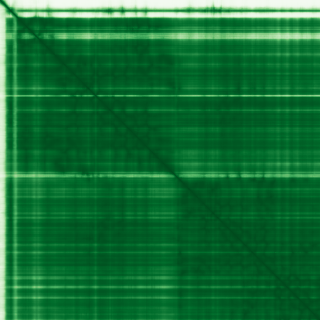
Mean pLDDT
95.1/ 100
Very high
919 residues
Confidence breakdown
- Very high(≥ 90)92%
- Confident(70–90)4%
- Low(50–70)1%
- Very low(< 50)3%
Open interactive 3D viewer
AlphaFold (Jumper et al., 2021) · CC BY 4.0
dehydrogenase E1 and transketolase domain containing 1
Annotations refreshed 3 months ago.
Diagnostic Grade (Green)
DDG2P
BIALLELIC, autosomal or pseudoautosomalHereditary neuropathy or pain disorder
MONOALLELIC, autosomal or pseudoautosomal, NOT imprintedIntellectual disability
BIALLELIC, autosomal or pseudoautosomalLikely inborn error of metabolism
BIALLELIC, autosomal or pseudoautosomalUndiagnosed metabolic disorders
BIALLELIC, autosomal or pseudoautosomalFetal anomalies
BIALLELIC, autosomal or pseudoautosomalChildhood onset dystonia, chorea or related movement disorder
Hereditary neuropathy
+2 more panels — install the extension to see the full list inline on any page.
2-aminoadipic 2-oxoadipic aciduria
Charcot-Marie-Tooth disease axonal type 2Q
Autosomal dominant Charcot-Marie-Tooth disease type 2Q
hereditary disease
neurodegenerative disease
Tip-toe gait
type 2 diabetes mellitus
chondrocalcinosis
alcohol drinking
Charcot-Marie-Tooth disease type 2A2
Score is the Open Targets composite evidence score (0-1). Higher = stronger gene-disease association.
2-oxoadipate dehydrogenase complex component E1
2-oxoadipate dehydrogenase (E1a) component of the 2-oxoadipate dehydrogenase complex (OADHC) (PubMed:29191460, PubMed:29752936, PubMed:32303640, PubMed:32633484, PubMed:32695416). Participates in the first step, rate limiting for the overall conversion of 2-oxoadipate (alpha-ketoadipate) to glutaryl-CoA and CO(2) catalyzed by the whole OADHC (PubMed:29191460, PubMed:32695416). Catalyzes the irreversible decarboxylation of 2-oxoadipate via the thiamine diphosphate (ThDP) cofactor and subsequent transfer of the decarboxylated acyl intermediate on an oxidized dihydrolipoyl group that is covalently amidated to the E2 enzyme (dihydrolipoyllysine-residue succinyltransferase or DLST) (Probable) (PubMed:29752936, PubMed:32303640, PubMed:32633484). Can catalyze the decarboxylation of 2-oxoglutarate in vitro, but at a much lower rate than 2-oxoadipate (PubMed:29191460, PubMed:29752936, PubMed:32633484, PubMed:32695416). Responsible for the last step of L-lysine, L-hydroxylysine and L-tryptophan catabolism with the common product being 2-oxoadipate (Probable)
DHTKD1 · Q96HY7
Mean pLDDT
95.1/ 100
Very high
919 residues
Confidence breakdown
AlphaFold (Jumper et al., 2021) · CC BY 4.0